
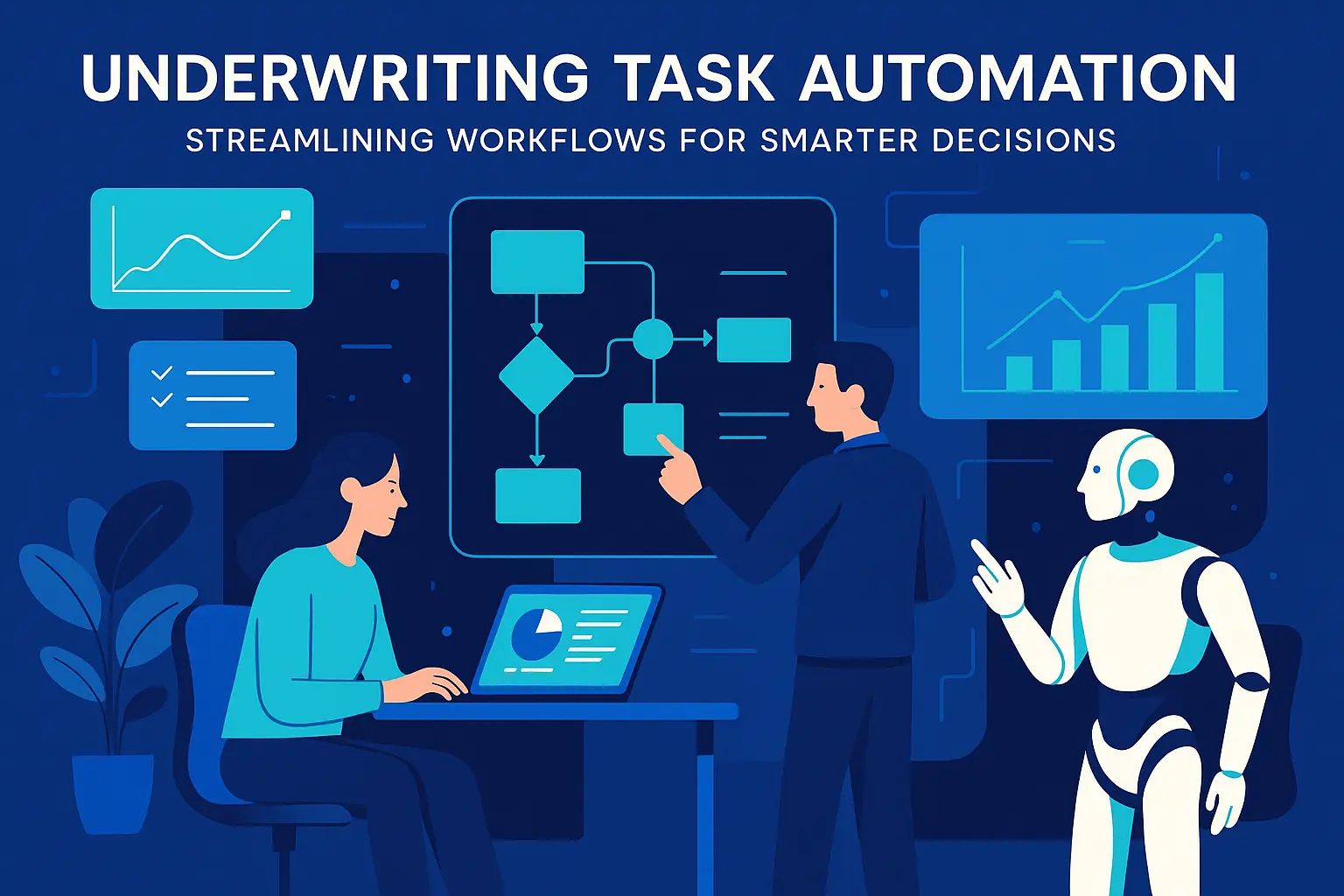
Underwriting Task Automation: Streamlining Workflows for Smarter Decisions
Sofia Rangoni

Jan 30, 2026
What Is Underwriting Task Automation?
Underwriting task automation replaces repetitive, error-prone manual steps with reliable software that handles decisions, data gathering, and document checks. By leveraging specialized technology, organizations can execute key underwriting tasks at scale, freeing up skilled professionals to focus on the nuanced, judgment-based aspects of risk evaluation.
How Automation Transforms Traditional Underwriting
Traditional underwriting relies on emails, spreadsheets, and manual reviews. Every application requires someone to sift through documents, enter data, and run checklists. Automation rewires this routine. Bots collect and verify details from emails or uploads, algorithms pre-screen risk factors, and intelligent forms highlight missing information instantly. Instead of clerical labor, underwriters spend their time solving complex cases or reviewing only the edge scenarios, boosting both productivity and job satisfaction.
Key Tasks Ripe for Automation
Some underwriting tasks are especially suited for automation. Data collection, like pulling credit reports, tax records, or KYC documents, benefits greatly from smart integrations. Document classification and extraction can be handled with AI that recognizes forms, IDs, and even handwritten details. Automated rule engines quickly check eligibility criteria and compliance flags. Workflow tools route cases to the right team members, cutting delays and lost files from the process.
With the basics of automation laid out, let’s look at the concrete gains organizations enjoy when these technologies do the heavy lifting.
Benefits of Automating Underwriting Tasks
Speed and Consistency
Automating underwriting eliminates the back-and-forth of manual reviews and repetitive checks. Applications can be evaluated almost instantly, ensuring every decision follows the same rules, every time. This keeps response times short, even during peak periods, while sidestepping delays that come with handling paperwork or waiting for internal approvals.
Reducing Errors and Manual Work
With automation, calculation mistakes and overlooked details become rare. Systems don’t get distracted or fatigued, so important fields won’t be skipped and requirements won’t be missed. Tedious data entry task lists shrink, letting teams focus on higher-level analysis rather than repetitive chores.
Better Use of Data
Automated workflows make it possible to analyze data from a variety of sources in real time. This broad view allows risk assessments that draw from everything available, not just what’s easiest to check. As a result, the decision process becomes more nuanced and based on the true profile of each applicant.
Enhanced Customer Experience
Applicants get answers faster without the confusion of lost forms or multiple follow-ups. Automated touchpoints keep everyone updated, making the process feel transparent and straightforward. When customers see underwriting as fast and predictable, satisfaction goes up, and so does the chance they’ll return.
To make these benefits a reality, understanding the technologies that power underwriting automation is essential. The next section uncovers the tools and advancements making these improvements possible.
Essential Technologies Powering Underwriting Automation
At the heart of modern underwriting automation is a trio of technologies that knit together decisions, data, and action. These solutions don’t just make things faster, they unlock smarter processes by tackling the most stubborn manual bottlenecks.
Workflow Automation Tools
Workflow automation tools map out underwriting steps into digital blueprints. Every document approval, data entry, or referral triggers the next action without human nudges. Tasks that used to sit in someone’s inbox overnight now move in real time. These tools give teams a single view of progress, highlight bottlenecks, and allow simple rules or conditional logic to route work. The result: applications glide through streamlined lanes, not winding mazes.
AI and Machine Learning Applications
AI isn’t just for sorting spreadsheets. Machine learning models identify patterns in applicant data, detecting risk flags, assessing historical claims, or even catching subtle signs of fraud hidden in self-reported information. These algorithms improve with every decision, quietly learning what good (and bad) applications look like. In minutes, they can surface insights that used to take teams hours of background checks or manual scoring.
Data Integration and Real-Time Decision Engines
Pulling in data from siloed systems is no small task. Underwriting automation leans on robust integration platforms and real-time decision engines, connecting core systems, third-party data, and even public records. When an application hits the system, these technologies grab up-to-the-minute credit scores, property records, or regulatory databases, serving the underwriting team with fresh, context-rich details. Decision engines apply business rules instantly, enabling automated pre-approvals or referrals before a file even hits a desk.
With these technologies, underwriting teams don’t just work faster, they think differently. Next up, we’ll dive into the core tasks most primed for automation so you can spot quick wins and long-term transformation opportunities.
Practical Examples: Core Underwriting Tasks to Automate
Document Collection and Data Extraction
Manual gathering of tax returns, pay stubs, or business financial statements can slow down any underwriting task. Automation tools now fetch and sort digital documents directly from customer uploads or email, then pull critical data, like income or asset values, using optical character recognition (OCR) and AI. This not only speeds up review time but completely cuts out the back-and-forth for missing paperwork.
Risk Assessment and Scoring
Instead of relying on spreadsheets or static checklists, automated systems plug in applicant data from multiple sources, credit bureaus, public records, or even real-time bank feeds. Scoring models powered by machine learning weigh these inputs instantly, reducing bias and flagging unusual patterns that might need a closer look. This lets underwriters spend more time on the exceptions, rather than routine cases.
Eligibility Checks and Compliance
Compliance rules and eligibility criteria change often, making manual checks risky and slow. Automation can instantly cross-check every application against the latest guidelines, from anti-money laundering rules to internal risk limits. This not only catches potential issues early but provides a clear audit trail for regulators or internal reviewers.
Decision Notifications and Communication
Once a decision is made, automated systems can generate and send out tailored notifications, approval letters, requests for more information, or explanations when coverage is denied. Templates can pull in key details, reducing wait times and the likelihood of miscommunication. Applicants know exactly where they stand, and support staff spend less time handling inquiries.
By automating these core underwriting tasks, teams can clear away repetitive hurdles and focus on high-value decisions. Next, we'll explore how to make that transition as smooth and impactful as possible, from picking where to start to measuring real results.
Implementation Tips: Getting Started with Task Automation
Prioritize Tasks for Immediate Impact
Start by mapping out your underwriting workflow to spot tasks that create the most bottlenecks or carry the heaviest manual load. Look for repetitive jobs like data entry, document retrieval, or rule-based eligibility checks, these are prime candidates for early automation. By choosing initiatives that deliver quick wins, you can build momentum and showcase tangible results to your team.
Integrate with Existing Systems
Before launching new automation tools, take stock of your current technology stack. Successful automation depends on seamless access to your core platforms and data repositories. Leverage APIs or low-code connectors where possible, and work closely with IT to identify integration points that won’t disrupt your daily operations. This groundwork will help avoid the pitfalls of siloed solutions and keep your workflow unified.
Monitor, Measure, and Iterate
Don’t set your automation on autopilot. Set clear benchmarks for success, turnaround time, error rates, customer response time, and check progress regularly. Use analytics from your automation platform to fine-tune processes and identify new opportunities for efficiency gains. As your team adapts, be prepared to adjust workflows and expand automation to new areas where it can add value.
With these foundational steps in place, it’s possible to unlock measurable improvements. But what does this look like in practice? Let’s see how automation is moving the needle for industry leaders solving real-world underwriting challenges.
Real-World Impact: Case Studies in Underwriting Task Automation
Insurance Underwriting
An international health insurer once faced weeks-long turnaround times for policy approvals, mainly due to a flood of physical documents and back-and-forth emails. By digitizing the application process and integrating AI-driven document reading, the team reduced manual file handling by 60%. Pre-screening applicants now happens in moments, allowing underwriters to zero in on complex cases instead of routine validations. Customers, who once waited impatiently for status updates, now receive decisions in hours instead of days.
Mortgage Underwriting
In a busy mortgage office, the stack of loan applications never seemed to shrink. Repetitive tasks, like verifying applicant income or cross-checking credit reports, dragged out approvals. By adopting automated data extraction tools, underwriters receive all required information in a structured, error-checked format. This cut the average loan review time from ten business days to just three, while delinquency rates dropped as a result of improved risk analysis. The real payoff: happier borrowers and a leap in completed applications per month.
Commercial Lending
A regional bank previously struggled to efficiently assess large volumes of business loan applications, resulting in missed opportunities and slow growth. Implementing workflow automation streamlined the entire process, from initial application intake to final risk assessment. Data from a variety of sources, financial statements, operational records, and credit bureaus, now populate a single dashboard for instant analysis. With bottlenecks eliminated, loan officers spend their time advising clients, not chasing documents. The automated process contributed to a 35% increase in processed loans within the first year, with more accurate and transparent decisions.
As automation continues to evolve, it's transforming not just speed and accuracy, but the very nature of how underwriters make decisions. The next wave of innovation will build on these success stories, reshaping roles and expectations throughout the industry.
Future Outlook: The Evolving Role of Automation in Underwriting
Automation is moving beyond simple rule-based tasks and venturing into territory once considered strictly the domain of human judgment. As algorithms grow more sophisticated, underwriting solutions will rely on context-aware analytics, not just workflows and checklists. Tomorrow’s systems will learn from past decisons, spot complex patterns in real time, and adjust risk models as new data streams in, without needing to re-code or rebuild pipelines.
AI-driven insights can surface previously invisible risk factors, allowing underwriters to make sharper, proactive choices. Automation, in this sense, isn’t about removing people from the loop; it’s about amplifying their expertise while sidestepping distractions like endless document reviews and manual data entry. Human judgment remains critical for nuanced or atypical cases, but the repetitive grind keeps shrinking every year.
At the same time, regulatory landscapes and customer expectations will keep evolving. Automated underwriting will need to become even more transparent, auditable, and adaptable to accommodate shifting compliance requirements and the demand for fairer, more personalized decisions.
This acceleration presents both an opportunity and a challenge: organizations that experiment, learn, and adapt early will benefit most from the coming wave of automated intelligence in underwriting. But capitalizing on these innovations means paying attention to the practicalities, how new tools blend with staff skills, core systems, and daily workflows.
With so much change ahead, understanding the real steps taken by organizations already on this path can provide valuable guidance for moving forward.






💚 Don’t get left behind
Ready To Join The Circular Movement?
United for a smarter shopping experience and a better planet