
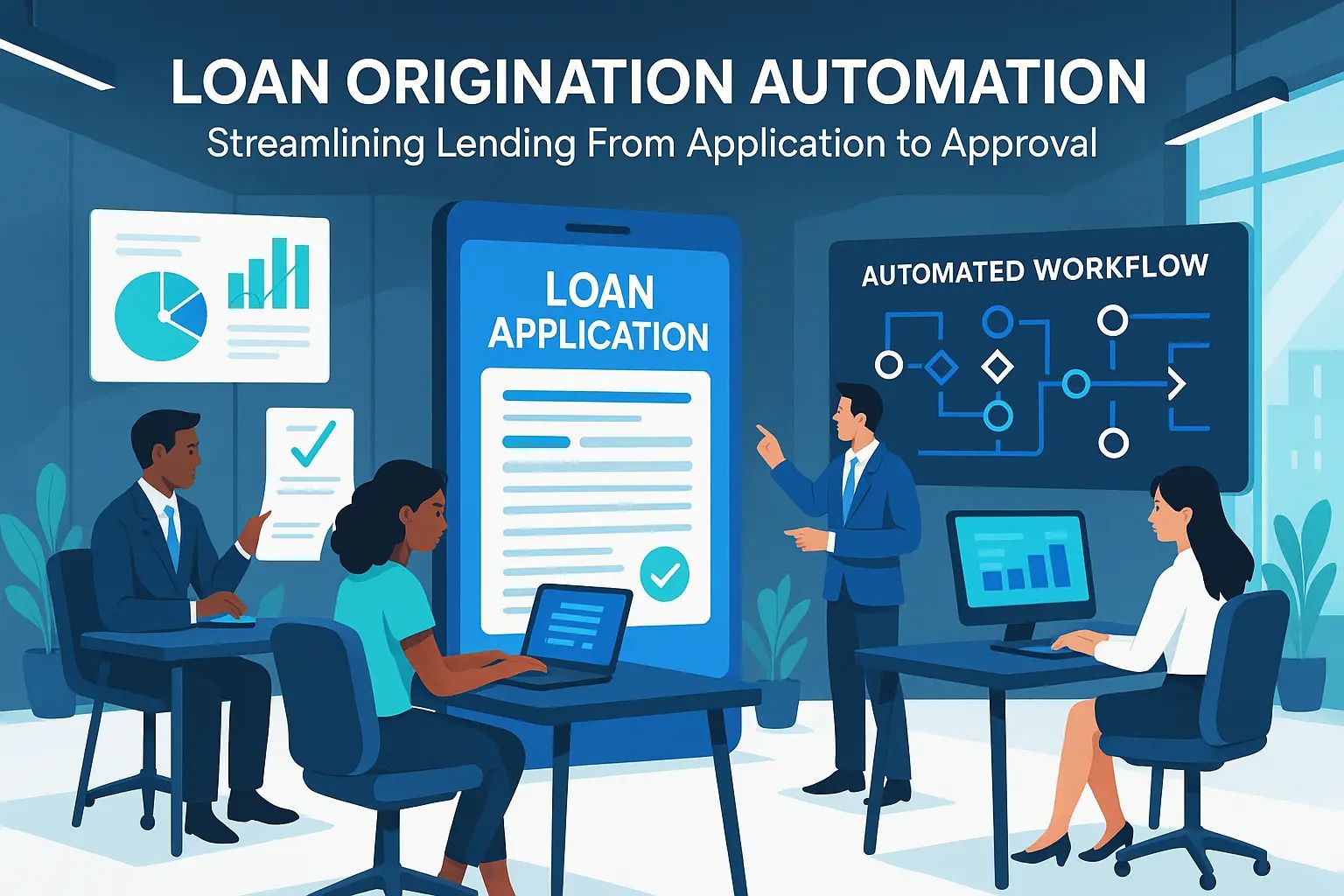
Loan Origination Automation: Streamlining Lending From Application to Approval
Sofia Rangoni

Feb 2, 2026
What Is Loan Origination Automation?
Loan origination automation brings digital precision to the entire lending cycle, turning what was once a paper-heavy, repetitive process into a streamlined experience for both lenders and borrowers. It uses specialized software to coordinate tasks from the moment a customer applies for a loan until the lender gives final approval, removing bottlenecks and cutting down on unnecessary manual effort at each stage.
The heart of loan origination automation lies in connecting disparate processes: collecting application data, verifying identity and documents, running credit checks, evaluating risk, and generating approval documents. Instead of employees handling each step one by one, automation orchestrates the entire journey using digital logic and integrations with third-party services.
Key Steps Automated in Modern Loan Origination
Automation now covers nearly every stage of the loan origination process. It can pull information directly from digital applications, verify applicant identity in seconds, collect and analyze supporting documents, retrieve credit scores instantly, and even pre-fill regulatory paperwork. This ensures that each application moves smoothly from submission to evaluation without manual delays or errors.
Loan Origination Automation vs. Manual Processes
In contrast, traditional loan origination involves manual reviews, phone calls, emails, and repeated data entry. Every handoff increases the chance for mistakes and can mean days of waiting for borrowers. Automation eliminates repetitive data entry, ensures information is checked against relevant databases in real time, and empowers lending teams to focus on more complex tasks rather than chasing paperwork.
Understanding the fundamentals of loan origination automation sets the foundation for exploring the persistent obstacles that traditional lenders continue to face. Let’s take a closer look at the practical challenges that make automation not just beneficial, but essential.
Current Challenges in Traditional Loan Origination
Data Collection and Document Management Pain Points
Paper-heavy application processes drown lenders in forms, ID copies, and supporting documents. Applicants are often required to submit the same information multiple times, leading to frustration on both sides. Lenders must then sort, verify, and manually check each document for completeness and authenticity. This patchwork of emails, scans, and physical paperwork creates bottlenecks where lost attachments or missing signatures can stall approvals for days or weeks.
Delays in Credit Assessments and Decisioning
Even after gathering all required documents, credit analysts face tedious manual input tasks. Information is re-keyed from forms into legacy systems, increasing the risk of errors and inconsistencies. Credit reports, employment verifications, and other core checks are handled in a fragmented sequence that can cause loan applications to languish in review queues. While waiting for approvals, borrowers sometimes abandon the process, resulting in lost business for lenders.
Compliance and Risk Issues
Regulations in lending are constantly shifting, requiring extensive record-keeping and regular compliance checks. Manual compliance workflows make it difficult to keep up with regulatory obligations and audit trails. If red flags go unnoticed due to human oversight, the institution is exposed to penalties or reputational harm. Meanwhile, inconsistent data formats and manual risk assessments introduce yet more uncertainty into credit quality decisions.
These challenges not only frustrate applicants and overburden lending teams, they also limit agility in the face of competition and technological change. Fortunately, a new approach is quickly altering this landscape, bringing efficiency and accuracy to every stage of the loan origination journey.
How Automation Transforms Loan Origination
Instant Data Validation and Application Scoring
Automated loan origination platforms capture applicant data the moment it’s entered, then immediately cross-check it against multiple trusted sources. No more waiting for staff to sift through pay stubs, tax records, or identity documents. As soon as an applicant clicks submit, automation engines flag discrepancies, verify income, and assess eligibility. This real-time data validation doesn’t just prevent typos or missing fields; it weeds out fraudulent applications at the starting line, giving lenders cleaner, more reliable data to work with.
Automated Credit Analysis and Risk Assessment
Algorithms analyze an applicant’s credit history, employment, and other risk indicators within seconds. Automated systems weigh dozens of variables, credit scores, outstanding debts, cash flow patterns, using models designed to reflect a lender’s real risk appetite. This isn’t just a faster version of manual reviews; it’s a smarter one. The process pinpoints creditworthy applicants who might be overlooked by rigid, legacy criteria and can spot subtle red flags that manual reviews might miss.
Seamless Integration with Core Banking Systems
Instead of toggling between spreadsheets, emails, and core banking interfaces, automation platforms connect directly with a bank’s existing systems. Decisions, approvals, and updates flow automatically between front-end loan origination tools and back-end processing engines. This tight integration cuts out duplicate data entry, keeps all teams working with real-time information, and makes the whole process auditable from start to finish.
With routine steps handled automatically and core systems in sync, lenders can focus more on building relationships and less on chasing paperwork. Next, let’s see how these technical gains lead to tangible advantages for both lenders and borrowers.
Benefits Lenders and Borrowers See With Automation
Faster Loan Approvals
Automation trims the time from application to decision. What once took days now happens in hours, as software verifies data and pulls credit histories in minutes. Borrowers get answers quickly instead of waiting in limbo, while lenders close more loans without bottlenecks.
Reduced Manual Errors and Fraud
Automated systems minimize copy-paste mistakes and missing paperwork that trip up traditional processes. Built-in checks flag inconsistent or suspicious details right away, making fraud attempts stick out early. Lenders gain better confidence in the quality of incoming applications, lowering future risk.
Lower Operational Costs
By automating document review and decisioning, staff can focus on complex cases instead of repetitive data entry. This efficiency means lenders can handle a larger volume of loans with the same, or fewer, people, reducing overhead and avoiding wasteful rework from accidental errors.
Improved Customer Experience
Borrowers enjoy a transparent process with clear status updates, digital document uploads, and fast approvals. Automation removes the guesswork, making the path to a loan less stressful and more convenient, no more juggling paperwork or waiting for callbacks.
With these tangible improvements, both lenders and borrowers stand to benefit. As more institutions embrace these changes, the landscape of lending is evolving, and knowing which automation features make the biggest impact is the next logical step.
Key Features to Look For in a Loan Origination Automation Solution
Configurability for Different Loan Products
No two lenders offer the exact same products, and borrower requirements shift all the time. Seek platforms that let you set loan terms, eligibility criteria, approval workflows, and document requirements based on your product mix. Drag-and-drop interfaces, flexible rule engines, and custom forms keep you nimble when launching new offerings or meeting evolving customer needs.
Scalability and Cloud Support
As loan volumes grow or your organization expands geographically, the automation system should keep pace effortlessly. Cloud-native solutions provide elastic resources and uptime you can depend on, old-fashioned IT headaches aside. Look for seamless updates and multi-region deployment support to ensure your operations never slow down, no matter how busy things get.
Real-Time Dashboards and Reporting
Instant insight can highlight application bottlenecks and reveal risk trends before they become real problems. Effective automation platforms include interactive dashboards, customizable reports, and live application tracking. Staff can use these tools to monitor pipeline health, compliance status, and performance metrics, all without exporting data to a spreadsheet.
Security and Regulatory Compliance Tools
Borrowers and regulators expect their data to be locked down tight. Leading solutions offer granular access controls, automated audit trails, and encryption everywhere it counts. Built-in compliance checks and regulation monitoring help minimize exposure to penalties and reputation damage, so you can adapt to new rules without scrambling.
With the right features in place, automation isn’t just about speed; it sets lenders up for growth and resilience. Next, see how organizations in the real world are already putting these tools to work, and what results they're seeing on the ground.
Real-World Examples: Loan Origination Automation in Action
Case Study: Automating Consumer Loans
When a regional credit union introduced automation to their loan origination process, the transformation was instant and visible. Before automation, customers often waited two or three days for loan approval, with staff bogged down by manual document checks and redundant data entry. After automating the credit pull, document verification, and eligibility checks, most loan decisions arrived within two hours. The biggest impact came from smarter data integration: automation gathered employment data, bank statements, and even utility bills with a single click. Borrowers uploaded documents by snapping a photo, dramatically reducing time and paperwork. As a result, approval rates climbed and customer satisfaction scores spiked, with the team focusing on high-touch support instead of admin work.
Case Study: Streamlining Small Business Lending
A midsize bank wanted to revamp its small business loan process, long infamous for slow approvals and piles of paperwork. By automating client onboarding, financial statement analysis, and credit risk reviews, they slashed average turnaround time from four weeks to six days. Instead of hand-sorting files, teams received real-time notifications if applications needed extra data. The solution also flagged incomplete sections and cross-checked applicant data across multiple sources, surfacing errors that would have delayed underwriting. For business owners, submitting applications became a mostly digital affair with progress tracked through a simple dashboard. The bank saw a 40% uptick in loan applications, not because their criteria changed, but because applying finally felt accessible and fast.
Seeing real outcomes in the field reveals how automation isn’t just about faster approvals, it’s about fundamentally reimagining the borrowing journey for both lenders and customers. To bring similar results to your organization, a thoughtful implementation plan makes all the difference; next, we’ll walk through the key steps to get started and what metrics reveal your progress.
Getting Started With Loan Origination Automation
Steps to Plan a Smooth Implementation
Launching a loan origination automation project should begin with a careful look at your current workflows. Before testing out new software or mapping integrations, outline the choke points that stall applications or create decision backlogs. Examine which manual tasks eat up your team’s time, such as document collection, data entry, or cross-system checks.
It’s essential to involve the people who work with these processes daily. Gaining their insights highlights potential snags and ensures early buy-in. Once pain points surface, work with your IT and compliance teams to define technical and regulatory requirements that any automation tool must meet.
Create a phased rollout plan that starts with low-risk products or business lines, giving teams a chance to learn and adapt. Prioritize solutions that are configurable to your unique rules and workflows rather than forcing you to change established best practices. Early training and clear change communication set the stage for smooth adoption.
Measuring Success: Metrics That Matter
After the initial rollout, focus on tracking practical metrics, not just anecdotes or one-time wins. Time to approval is a good leading indicator, but dig deeper. Measure reductions in manual data entry, error rates in completed applications, and the frequency of compliance exceptions flagged by the system.
Enhanced borrower satisfaction should show up in faster responses and lower abandonment rates, while operational data should show staff spending less time reworking files or chasing down signatures. Monitor both the speed of approvals and the overall accuracy of credit decisions. Continuous improvement comes from regularly reviewing these metrics and making adjustments, not simply automating and stepping away.
With an implementation roadmap and success measures in place, it’s time to look at the innovations shaping the next wave of digital lending.
The Future of Automated Loan Origination
AI and Machine Learning in Lending Decisions
Lending algorithms are shedding their rigid rules in favor of adaptive, data-driven models. Machine learning detects lending patterns in real-time, continuously learning from every approved and rejected application. Automated systems now consider dozens of data sources, from digital bank statements to blockchain-verified assets, allowing for nuanced risk profiles that far outperform credit-score-only models.
Imagine loan officers collaborating with AI tools that flag edge-case applicants, surface hidden trends, and predict default risk down to the individual level. Human bias in decisions is reduced, and underserved applicants have new opportunities as non-traditional credit data gains weight. As these models advance, approvals are not just fast, they become fairer and fundamentally more informed.
Evolving Regulations and Oversight
Automation's growth in lending is closely watched by regulators, intent on ensuring transparency and ethical use of data. Upcoming years will see stricter guidelines, demanding explainable AI that openly shows how certain lending decisions are made. Lenders will be required to document every automated decision trail, opening the black box of machine learning for scrutiny.
Meanwhile, automation also eases compliance headaches. Modern platforms can instantly check regulatory thresholds, flag anomalies, and create audit logs at every step. As regulatory frameworks evolve, loan origination automation will evolve with them, continuously adapting to protect lenders and borrowers alike.
Technology and regulation are now tightly interwoven in the lending landscape. As these forces accelerate, understanding how to navigate them becomes essential for every lender considering digital transformation. Let’s explore the most common questions and concerns that come up when organizations consider making the shift.
Frequently Asked Questions About Loan Origination Automation
How does loan origination automation actually speed up the lending process?
By cutting out repetitive manual tasks, automation lets information flow between systems instantly. For example, borrowers’ data can be checked, verified, and pushed through decision engines in seconds, rather than hours or days.
Will automation mean fewer loan officers or underwriters?
Automation doesn’t replace experts, it frees them up. Repetitive chores go to software, while complex judgment calls and personal interactions stay with humans. Teams spend less time shuffling papers and more time advising clients or tackling exceptions.
Can automation help catch fraud or reduce mistakes?
Yes. Automated rules don’t get tired or distracted, and they don’t skip steps. They cross-check data, flag inconsistencies, and enforce internal controls every time, helping catch errors and suspicious activity before they become a bigger problem.
Isn’t loan origination software just for big banks?
Not anymore. Smaller lenders, credit unions, and fintech startups have access to platforms scaled for their size, sometimes with quick, cloud-based deployment options and pay-as-you-go pricing.
Won’t applicants get lost in the “automation black hole”?
When designed well, automation actually boosts transparency. Applicants can track progress, receive instant alerts, and get real-time feedback, making the process clearer than waiting for a call-back or email update.
What about regulatory compliance in an automated process?
The best solutions bake compliance checks into every stage: identity verification, data retention, and audit logs are integrated. That way, every step leaves a digital trail and meets the latest legal standards automatically.






💚 Don’t get left behind
Ready To Join The Circular Movement?
United for a smarter shopping experience and a better planet