
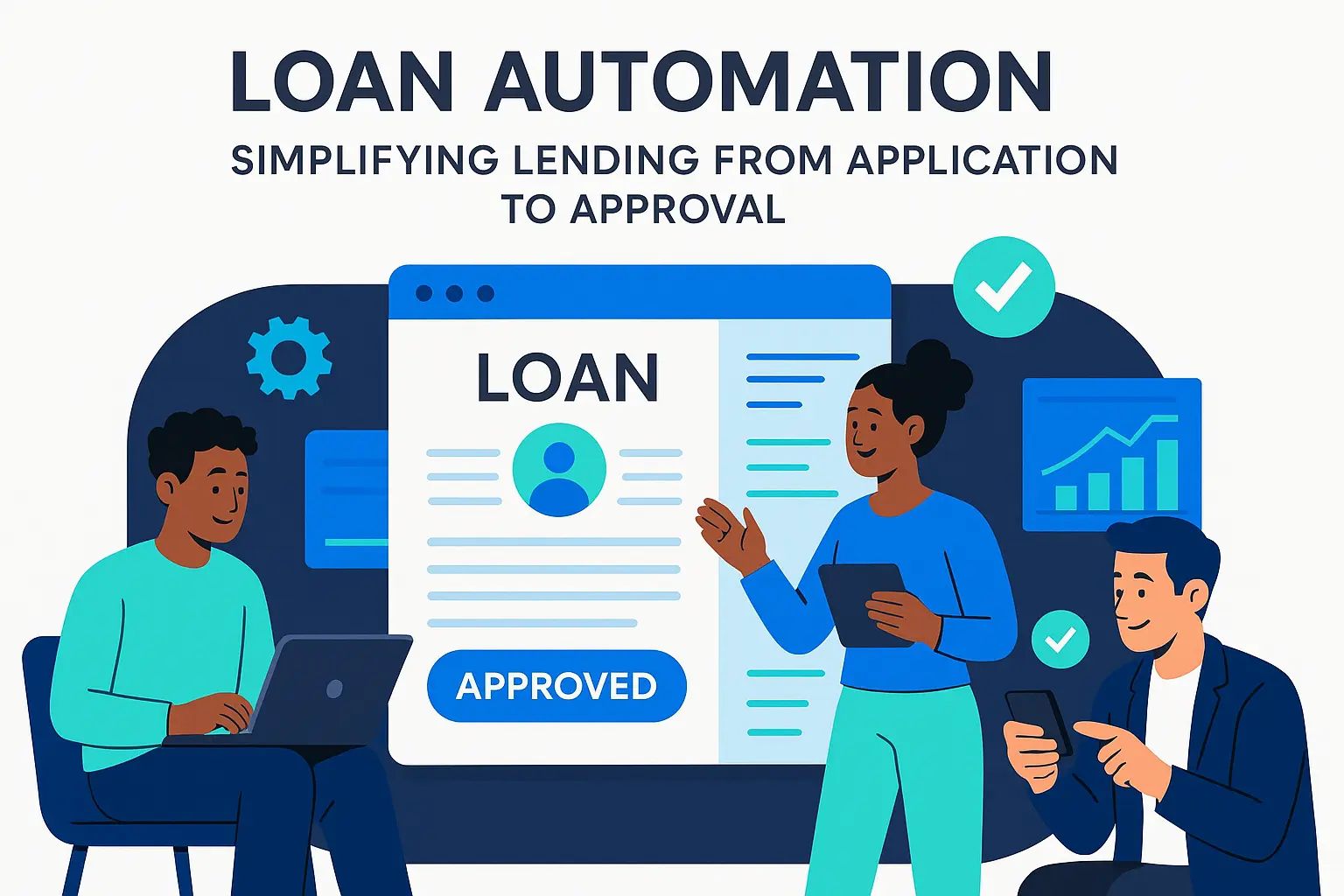
Loan Automation: Simplifying Lending from Application to Approval
Sofia Rangoni

Jan 5, 2026
What Is Loan Automation?
Loan automation is the use of digital tools and intelligent systems to handle the journey of a loan application, from the first form submitted online to the final approval or rejection. Instead of relying on piles of paperwork, phone calls, and manual calculations, automation combines software, data integration, and real-time algorithms to automate steps that traditionally required hours of human effort.
An automated loan process pulls together several moving pieces. When these components work in sync, loans can move from application to funding almost entirely without manual intervention.
Manual vs. Automated Lending: Key Differences
The classic approach to lending is slow, repetitive, and often error-prone. Staff must sift through applications by hand, chase down missing paperwork, and pass files between different departments. Mistakes can easily sneak in, leading to delays or even lost opportunities for both the lender and borrower.
In sharp contrast, automated lending is designed for speed and accuracy. Each stage is tracked digitally: no missing forms, no data re-entry. While humans are still needed for complex cases, most straightforward loan decisions can happen in a fraction of the time, freeing up staff for higher-value work and giving applicants faster answers.
Understanding these fundamental differences sets the stage for a closer look at how each step of the lending process can be reimagined, right from the moment a borrower begins their application.
How Loan Automation Works Step-by-Step
Automated Document Collection and Verification
The application begins online, where borrowers securely upload pay stubs, identification, or tax documents. Optical Character Recognition (OCR) instantly reads and checks the files, matching details against fraud databases and pulling information from government sources. Instead of sifting through piles of attachments, the system confirms authenticity in a matter of seconds, flagging any outliers for review.
Digital Credit Analysis and Risk Assessment
With documents verified, the platform automatically pulls credit scores and analyzes income, debt, and payment history. Algorithms evaluate thousands of data points, including recent employment changes or spending trends, to calculate risk. This automated scrutiny minimizes guesswork and delivers an instant snapshot of the applicant’s creditworthiness, without human bottlenecks.
Streamlined Underwriting and Approval
The system applies lender policies and regulatory rules to the digital application. Automated underwriting engines check everything from minimum income thresholds to debt-to-income ratios, ensuring the application meets all requirements. If everything aligns, the software generates an approval decision within minutes: no more waiting days for back-and-forth emails.
Automated Notifications and Communication
Borrowers receive instant updates by email or SMS at each step, whether something needs clarification or the loan has been approved. These automated messages keep everyone in the loop, reducing anxiety and eliminating the need to call for status updates. Lenders also get reminders or action requests, ensuring nothing slips through the cracks.
Understanding these steps offers insight into the remarkable efficiency of automated lending. Next, let’s explore the impact of this streamlined process on the experience for both borrowers and lenders.
Benefits for Lenders and Borrowers
Faster Decisioning and Reduced Turnaround Times
Instant data checks can turn what was once a days-long loan review into a process measured in minutes. Automated loan systems analyze applications, run credit checks, and flag missing documentation right away, freeing borrowers from waiting and allowing lenders to serve more clients in less time.
Consistency and Reduced Human Error
Automation ensures every application is reviewed the same way. Decision-making rules are coded into the system, so loan approvals don’t hinge on moods or fatigue. This consistent approach reduces missed details, calculation mistakes, or lost forms, leading to fairer outcomes for every applicant.
Improved Customer Experience
No more endless paperwork or repeating the same details to multiple people. Loan automation lets borrowers upload documents online, track their application in real-time, and receive updates automatically. Lenders benefit from fewer follow-up calls and happier customers who enjoy a clear, transparent process.
Better Compliance and Audit Trails
Every keystroke in an automated system is tracked. This means full visibility into who accessed what, when, and why, making regulatory audits faster and less stressful for lenders. Automated platforms also alert staff to missing compliance steps, reducing the risk of costly mistakes or fines.
As early gains become clear, the real transformation emerges with the use of smarter technologies. Let’s see how the next wave of automation is already changing the way lenders make decisions.
AI in Loan Automation: Smarter, Faster Lending
AI Use Cases in Lending
Artificial intelligence quietly powers much of today’s lending journey behind the scenes. Instead of sifting through stacks of paperwork, AI algorithms can instantly verify identity documents, flag inconsistencies, and pull credit data from multiple sources. These systems examine thousands of data points beyond a standard FICO score, like cash flow patterns or digital footprints, to build a nuanced picture of creditworthiness. Machine learning models can even spot subtle fraud signals, such as a mismatched address between documents, in real time, often catching what human eyes might miss.
AI also fuels smart decisioning engines that evaluate risk and recommend loan terms tailored to the applicant. Gone are “one size fits all” checklists; instead, each application is assessed using historical outcomes and predictive analytics, making approvals both fairer and less risky. Natural language processing can scan and extract details from uploads such as bank statements, easing the burden on borrowers and reducing manual errors. Even customer support bots, powered by AI, provide quick answers and personalized updates throughout the process, ensuring applicants aren’t left in the dark.
Real-World Examples: AI-Driven Loan Automation
In practice, AI has transformed lending for both large banks and nimble fintechs. Digital-first lenders harness AI to approve small business loans within minutes, evaluating transaction history, online reviews, and e-commerce performance alongside credit reports. By using AI-driven risk models, some platforms have expanded access to credit for thin-file applicants who might have been overlooked before, like freelancers or gig workers.
Meanwhile, mortgage providers employ AI to crunch data from employers, government records, and tax returns, accelerating pre-approvals that once took days or weeks. AI-based chatbots are now lending a hand to answer application questions anytime, freeing up staff for more complex cases. Fraud prevention has also taken a leap forward; advanced algorithms can identify duplicate applications across multiple lenders or spot deepfake documents, slashing both risk and response times.
As these examples show, AI isn’t just a back-end upgrade, it can redefine the borrower’s experience and the lender’s reach. But the true magic unfolds when these smart tools are adapted to the unique requirements of each kind of loan, from large home mortgages to small digital loans. That’s where the full spectrum of automation really comes to life, as we’ll explore next.
Automated Loan Processes Across Loan Types
Mortgage and Home Loans
Mortgages involve extensive paperwork, property appraisals, and complex credit checks. Automation streamlines each step, collecting digital applications, verifying income through direct integrations with payroll systems, and pulling credit data instantly. Automated workflows organize tasks like appraisal ordering, title research, and document verification, letting borrowers track their progress online and enabling underwriters to review files faster. As a result, closing timelines shrink from weeks to days, while transparency increases for everyone involved.
Consumer and Personal Loans
For personal loans, speed is often a deciding factor. Automated solutions enable customers to submit applications online and get instant eligibility checks. Algorithms analyze risk by accessing credit scores, transaction histories, and even alternative data such as utility bill payments. Automated decisions can deliver approvals or denials in seconds, cutting down on manual reviews and giving consumers rapid access to funds.
Small Business Lending
Small business loans typically require a financial deep dive, reviewing business plans, cash flows, tax returns, and credit histories. Automation simplifies this by connecting directly to business bank accounts and accounting software, pulling financials without paperwork. Rule engines assess repayment capacity and risk, while pre-populated forms eliminate repetitive data entry. This boosts both speed and accuracy, allowing lenders to scale up small business approvals without increasing back-office headaches.
Microfinance and Digital-Only Loans
For microloans and fully digital lenders, automation is essential for processing high volumes of small-sized applications efficiently. Digital KYC (Know Your Customer) and biometric verification replace in-person interviews, while mobile apps guide borrowers through every step. Instant risk scoring, sometimes enhanced by AI analyzing non-traditional data such as social media profiles, enables faster decisions and broadens access to finance for underserved communities.
As automated lending adapts to fit distinct loan types, each process gains unique efficiencies. But implementing automation across diverse products isn't without hurdles. Up next, let’s explore common roadblocks and practical solutions for seamless integration.
Common Challenges and How to Overcome Them
Integrating Automation with Legacy Systems
Legacy software often stands in the way of modern loan automation. Many lenders still rely on aging platforms that weren’t built for real-time data exchange or API-driven connections. This can lead to bottlenecks when trying to move toward automated workflows. Compatibility gaps may stall implementation, creating friction between old and new tools.
The fix? Roll out automation in stages by first identifying high-impact, low-risk processes to digitize, like document processing or customer notifications. Robust middleware platforms can bridge critical gaps and translate data between systems. Collaboration between IT and loan operations is also essential; when frontline users weigh in on priorities, integration plans stay grounded and effective.
Ensuring Data Privacy and Security
Automated lending means more sensitive information travels between systems. Without tight controls, data exposure risk grows. Cyber threats evolve quickly, and regulatory expectations keep rising. Data breaches can erode trust in an instant.
Encryption, both in transit and at rest, should be standard. Automated audits and anomaly detection help flag anything out of place before it becomes a problem. Multi-factor authentication, restricted user access, and regular security refreshers for staff close weak links. Compliance frameworks, such as SOC 2 or ISO 27001, provide a foundation for robust security policies.
Maintaining Compliance in a Changing Landscape
Regulations are always in flux. Automated systems, if not carefully managed, can inadvertently process loans in ways that fall out of bounds. Laws like the Equal Credit Opportunity Act and GDPR have very specific requirements for data usage, transparency, and consumer consent.
The answer lies in flexible rule engines that update as regulations change. Transparent decision-making, such as storing every step and rationale, also eases audits. Regular collaboration with compliance teams ensures all changes reflect the latest legal standards, keeping automation on the safe side.
Addressing these obstacles from the outset lays the groundwork for a smoother, more scalable loan automation journey. Up next, we’ll explore practical approaches for organizations gearing up to put these solutions into action.
Best Practices for Implementing Loan Automation
Choosing the Right Technology
Start by mapping your current lending workflow from application to approval. Pinpoint steps that slow down decisions or open doors to mistakes. Look for loan automation platforms designed to fit your unique needs: some excel at complex mortgages, while others thrive with small business loans or consumer credit. Consider integration flexibility, the best solutions plug into your existing systems without lengthy rebuilds. Favor cloud-based platforms with proven security standards and easy scaling as your lending volume grows.
Before choosing a vendor, request a live demonstration using your real-world scenarios. This will reveal how automation handles your specific documentation, compliance, and approval requirements.
Staff Training and Change Management
Automation changes daily tasks and shifts team responsibilities, so plan training early. Don’t just teach people how to use new tools, explain how workflows change and why these changes benefit both the team and borrowers. Appoint “automation champions” who can answer peer questions and flag issues in the early stages. Gradual rollouts allow team members time to adapt and surface feedback for continuous adjustment.
Listen closely to front-line staff. Their hands-on experience is vital for spotting process hiccups and redesigning roles around new efficiencies.
Measuring Success: Key Metrics to Track
Set clear goals from the start, automated lending only pays off if you can prove it. Monitor metrics like average time from approval application, rate of incomplete applications, and reduction in manual work hours. Tracking error rates before and after implementation will show if automation is delivering more consistent outcomes. Run regular borrower satisfaction surveys to gauge improvements in client experience.
Review these metrics monthly, then realign processes or training as needed. Over time, build a dashboard so teams can visualize progress and maintain focus on continual improvement.
With fundamentals in place, the path opens to exciting new possibilities, emerging technologies are already changing how lenders approach automation, and what seemed futuristic yesterday is quickly becoming standard practice.
What’s Next: The Future of Loan Automation
Trends to Watch
Loan automation is set to evolve far beyond today's rules engines and digital forms. Cloud-native platforms are becoming the engine room for lending, allowing banks and fintechs to spin up new products in weeks instead of months. At the same time, open banking is opening secure access to a broader range of financial data, shaping smarter underwriting and more tailored offers for borrowers. Another unfolding trend: process automation is moving to mobile, bringing the entire loan journey, from document upload to approval, directly to a borrower’s fingertips.
Machine learning models are also gaining ground. Soon, borrowers with thin credit files may find their financial behaviors, from rent payments to utility bill histories, feeding into smarter loan decisions. Meanwhile, new regulations and standards are pushing providers to bake data privacy directly into the core of automation platforms.
Building a Fully Digital Lending Experience
The most ambitious goal ahead is a lending process that feels seamless from start to finish. Imagine submitting a loan application in-app, receiving instant feedback, and accessing funds without ever interacting with paper or a physical branch. Voice assistants and chatbots trained in financial services can offer natural, real-time support, while secure digital IDs make identity verification nearly invisible to the user. For lenders, these advances aren’t just about speed, they lay the groundwork for personalized products, faster onboarding, and more inclusive access to credit.
As automation shapes the future of lending, success will come down to how well organizations balance technology with the human touch. The next step is putting these innovations into action while ensuring every borrower feels seen, understood, and protected.






💚 Don’t get left behind
Ready To Join The Circular Movement?
United for a smarter shopping experience and a better planet