
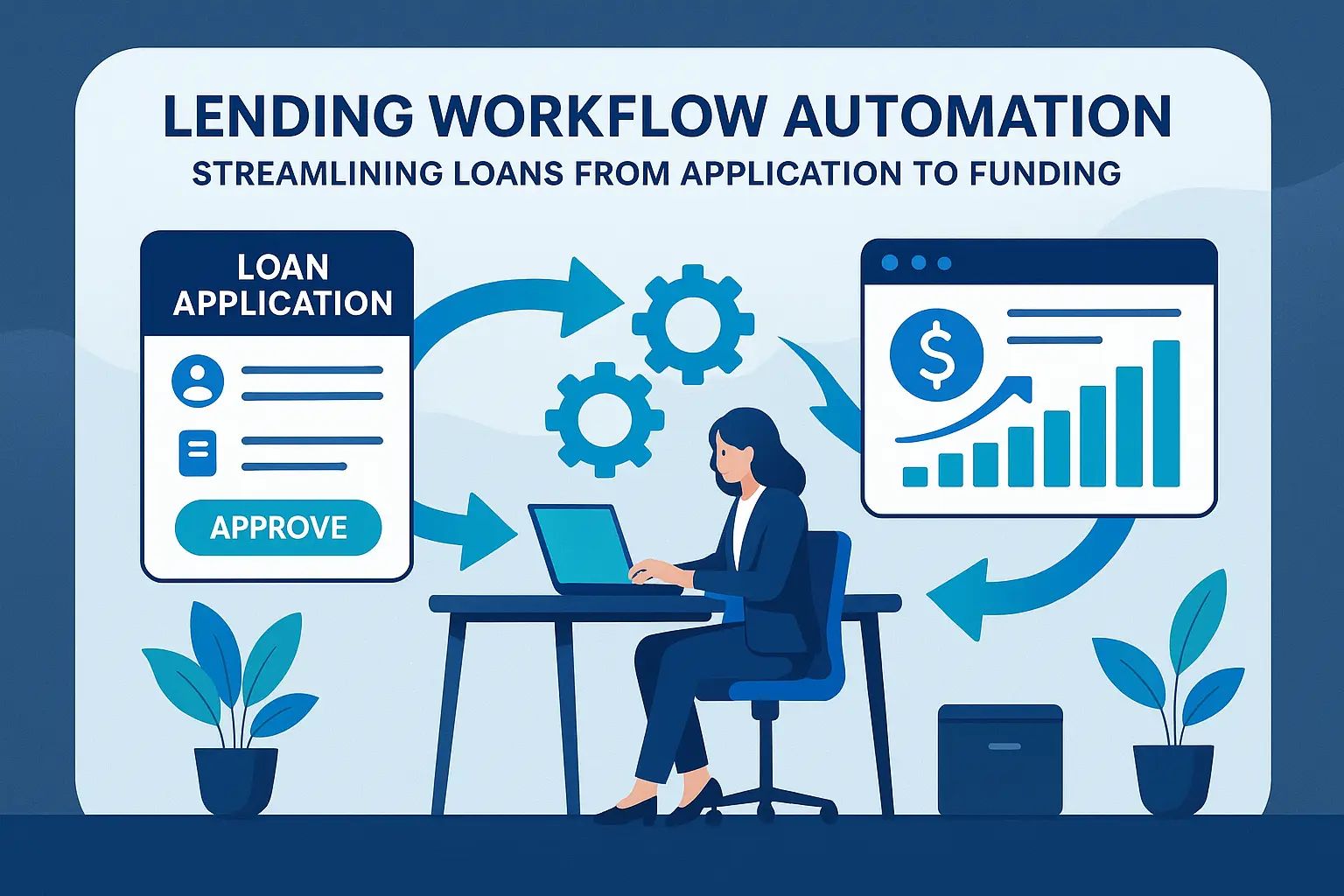
Lending Workflow Automation: Streamlining Loans from Application to Funding
Sofia Rangoni

Jan 27, 2026
What is Lending Workflow Automation?
Lending workflow automation means using technology to handle the repetitive, rule-based steps of the loan process, so that humans can focus on what actually needs their expertise. Instead of combing through paperwork, chasing documents, or sending dozens of update emails, automation quietly takes over these tasks behind the scenes.
Core Processes Covered by Automation
From the first click on a loan application to the final deposit of funds, automation can manage a surprising list of tasks. These include collecting borrower information, verifying documents, scanning credit data, assessing risk, generating loan offers, and more. Each step is connected, making sure nothing slips through the cracks. For lenders, this means fewer delays and a smoother, more predictable loan journey for applicants.
Manual vs. Automated Lending Workflows
Manually processing a loan usually means passing files between people, re-entering data across different systems, cross-checking for missing items, and picking up the phone to fix minor issues. With automation, these steps happen instantly: applications are validated on the spot, information is shared automatically, and reminders go out without anyone tapping a keyboard. As a result, loans move faster, errors are rarer, and staff spend less time on routine tasks and more time helping customers directly.
Now that you know what lending workflow automation is and how it transforms the loan process, let's take a closer look at why making this shift can create real benefits for both lenders and borrowers.
Key Benefits of Automating Lending Workflows
Faster Processing and Funding
Automation moves loan files through review, approval, and funding steps at unprecedented speed. Tasks that once took days, like document validation and credit pulls, are now completed in minutes. Borrowers experience less waiting, while lenders close deals before competition even begins chasing the same leads.
Improved Accuracy and Compliance
Automated systems flag missing paperwork, detect inconsistencies, and immediately apply updated regulatory rules during every step. This reduces the need for rework and slashes the odds of compliance auditing headaches, freeing up your team to focus on genuinely complex cases instead of backtracking to fix data entry mistakes.
Enhanced Borrower Experience
No more radio silence or endless requests for the same document. Borrowers receive instant updates on their application status and know exactly what’s needed next, thanks to automation-driven notifications. Secure digital portals let applicants upload and sign everything from their mobile device, making the experience as easy as ordering from their favorite online shop.
Cost Reduction for Lenders
With routine manual work replaced by automated workflows, teams handle a higher volume with the same, or even fewer, resources. The drop in paper processing, error corrections, and redundant tasks adds up to real, trackable savings that improve the lender’s bottom line.
Understanding these tangible advantages sets the stage for a closer look at which areas of the lending lifecycle benefit most from automation and how to identify quick wins in your own operation.
Essential Components of Lending Workflow Automation
Application Intake and Pre-Qualification
Instead of endless back-and-forth emails, automated systems guide borrowers through intuitive online forms, capturing all necessary information up front. Real-time eligibility checks instantly flag incomplete applications and help applicants find the right loan products for their profile.
Automated Document Collection and Verification
No more paper chases or chasing down missing bank statements. Automated portals issue personalized document requests, while built-in verification tools cross-check data for authenticity, flagging potential inconsistencies before they stall the process.
AI-Powered Credit Assessment
Old-fashioned credit scoring systems rely on rigid formulas. Modern automation leverages artificial intelligence to analyze a wider range of data, uncovering trends and risk signals that traditional models might miss. This results in smarter, more inclusive lending decisions.
Automated Decisioning and Underwriting
Automated engines simultaneously weigh countless variables (income, credit history, collateral value) against internal policies and external regulations. Conditional approvals, exception handling, and instant notifications keep decisions swift and transparent, reducing loan cycle times dramatically.
Digital Closing and E-signatures
Borrowers can now review and sign documents from anywhere, on any device, thanks to secure digital signature solutions. Automated workflows coordinate the delivery, execution, and tracking of every form, ensuring accuracy and eliminating last-minute surprises at closing.
Post-Funding Monitoring and Servicing
Once the funds are disbursed, automation continues to play a crucial role. Scheduled reminders, compliance checks, and automated servicing requests help maintain healthy loan performance, while proactive alerts minimize delinquency risks and strengthen customer relationships.
Each of these components forms an essential link in the automated lending chain. To see how these elements come to life in everyday lending scenarios, from consumer loans to commercial financing, let’s look at some real-world examples.
Real-World Use Cases: Lending Workflow Automation in Action
Consumer Lending
Applying for a personal loan used to mean paperwork, phone calls, and waiting. Automated lending workflows now allow applicants to fill out digital forms and upload supporting documents from their smartphones. Background checks, income verifications, and credit assessments run in the background. Results come back in minutes, not days, and borrowers receive instant updates about their application status. This rapid turnaround not only improves satisfaction but helps lenders identify quality borrowers while reducing the risk of manual errors.
Mortgage and Real Estate
Few processes are more detail-heavy than mortgage lending. Automation streamlines document collection and verification, such as bank statements, pay stubs, and appraisals, in a unified portal. Automated underwriting rules quickly flag incomplete or inconsistent files, reducing the back-and-forth between lender and buyer. Digital closing tools enable borrowers to review and sign documents remotely, trimming weeks off traditional timelines. Lenders report higher closing rates thanks to improved transparency and speed.
Commercial and Equipment Financing
Businesses seeking equipment loans or working capital often juggle complex paperwork and tight deadlines. Automated workflows collect key data from accounting systems and public databases, verify business credentials, and automate much of the risk assessment process. Approvals that once took weeks can now happen in a matter of days. Lenders benefit from clear records, while borrowers get faster access to the funds they need to fuel growth.
As automation transforms these real-world scenarios, the technologies behind the scenes play a crucial role, uncovering how each tool powers the next generation of lending solutions offers valuable insight for lenders ready to evolve further.
Top Technologies Powering Lending Workflow Automation
Artificial Intelligence and Machine Learning
AI and machine learning have transformed lending workflow automation by bringing cognitive capabilities into the process. From instantly analyzing creditworthiness to flagging fraudulent applications, these tools do the heavy lifting much faster and more accurately than humans. AI-driven models score borrowers, predict defaults, and even personalize offers in real time, ensuring decisions are both fair and rapid.
Robotic Process Automation (RPA)
RPA manages repetitive, rule-based tasks like data entry, document sorting, and system updates. Think of it as a team of reliable digital workers tirelessly copying information between systems and validating loan paperwork. This not only slashes errors but also frees up staff to focus on activities that require human judgment.
API Integrations and Cloud Platforms
Open APIs connect lenders with credit bureaus, verification services, and payment processors in the blink of an eye. Cloud-based systems bring agility, allowing connections with new third-party tools on demand. The result: vital data flows smoothly between every platform involved, supporting a seamless borrower experience and robust compliance.
Document Recognition and OCR
Automated document recognition and Optical Character Recognition (OCR) extract relevant data from income statements, IDs, or tax returns as soon as they’re uploaded. This technology turns stacks of paperwork into searchable, structured information, ready for downstream processing without human error or delay.
By weaving these technologies into their operations, lenders are setting the stage for new levels of speed, accuracy, and transparency. Next, let's look at how organizations can maximize the impact of automation by making smart choices about technology, integration, and change management.
Critical Factors for Successful Implementation
Integration with Existing Systems
Automating lending workflows rarely happens on a blank slate. Most lenders have legacy platforms, loan origination systems, CRM software, document repositories, and payment processors. Smooth automation demands connectors or APIs that weave new tools into these established environments, minimizing duplicate data entry and siloed processes. Robust integration ensures your team and borrowers never notice where one system ends and another begins.
Security and Regulatory Compliance
Loan data is sensitive, and automation doesn’t lower the stakes. Encryption, strict access controls, and real-time audit trails are non-negotiable. Automated checks must be updated as regulations evolve (think GDPR, GLBA, or Fair Lending laws), so your automation solution should make compliance visible and enforceable without manual intervention. Never treat regulatory tasks as an afterthought; they belong at the heart of automation design.
Choosing the Right Platform or Vendor
No two lending teams are identical, and neither are the dozens of automation options on the market. Prioritize platforms that have proven integrations within your industry, offer strong customer support, and provide no-code or low-code customization to address your unique workflows. Avoid chasing features for their own sake and instead look for tools that will scale as your loan volume grows.
Training Teams and Managing Change
The best software is only as effective as its users. Plan for focused onboarding and hands-on workshops that let teams experience the new workflow in action. Consider power users who can champion new processes, answer frontline questions, and provide feedback to continuously refine the automation. Resistance is often rooted in uncertainty, so clear communication and visible wins are crucial for momentum.
When these foundational pieces are in place, you can look beyond the implementation checklist to assess whether automation is really moving the needle and where it’s delivering measurable results.
Measuring the Impact: Key Metrics to Track
The real value of lending workflow automation comes into focus when you track results. Rather than relying on impressions or anecdotes, a handful of numbers shine a spotlight on progress, for both lenders and borrowers.
Loan Cycle Time Reductions
The time it takes a borrower to go from application to funding is the most telling indicator. Automation trims bottlenecks across every stage: application review, document verification, underwriting, and closing. Track the average number of days (or even hours) it takes to fund a loan before and after automation; this quantifies productivity gains and reveals where you can streamline even further.
Error Rate Improvements
Manual handling often introduces typos, missed fields, and compliance oversights. Automated workflows cut down on these mistakes. Measuring the number of errors detected in applications and document reviews before and after automation gives a clear picture of improved accuracy and compliance reliability.
Borrower Satisfaction Scores
Feedback from applicants matters just as much as backend results. With faster processing and fewer requests for missing paperwork, borrowers respond positively. Use satisfaction surveys, NPS scores, or app ratings to see how automation changes perception and overall customer experience.
Operational Cost Savings
Automated workflows reduce the need for repetitive manual work and the costs associated with it. Compare staffing requirements, processing expenses, and error remediation costs over time. Tracking these savings highlights the tangible financial impact automation brings to your operations.
With these metrics in hand, lenders can assess progress and pinpoint areas for further refinement. As automation evolves, so do the possibilities, opening the door to innovations that will reshape loan origination in the years to come.
Future Trends in Lending Workflow Automation
AI-Driven Personalization
Personalization is rapidly becoming the norm rather than the exception in lending. Artificial intelligence now sifts through layers of borrower data, from transaction records to digital footprints, to craft tailored loan products and offers. This isn’t just about using someone’s name in an email; it’s about predicting what a borrower wants, before they even ask. Expect dynamic loan terms, individualized communications, and adaptive servicing that responds in real time to customer behavior.
End-to-End Digital Lending
The next leap is a seamless, fully digital lending journey where manual tasks disappear. Borrowers complete applications entirely online, upload documents via mobile, and move through underwriting without ever touching pen or paper. Even closing and disbursing funds happens in a few clicks. Automated workflows connect everything: credit bureaus, identity checks, fraud screening, and digital signatures, all working in concert to collapse loan cycle times from days to minutes.
Predictive Analytics for Risk Management
With predictive analytics, risk teams stop looking in the rearview mirror. Machine learning models ingest alternate credit data, macroeconomic signals, and behavioral trends to spot risk patterns as they emerge. Outliers, like unexpected repayment behaviors or changes in industry stability, trigger alerts long before default rates rise. Lenders can pivot loan offerings or tighten controls instantly, leading to healthier portfolios and fewer surprises.
As these trends gain ground, they’re changing what borrowers, regulators, and stakeholders expect from any lending operation. To thrive, lenders need clear strategies for evaluating what to automate, balancing innovation with risk, and mapping out the road ahead. Up next, let’s look at how to move from vision to action and set your automation plans in motion.
Getting Started with Lending Workflow Automation
Assessing Your Lending Processes
Before you jump into automation, take a close look at your current lending operations. Map out each step, from loan application intake to final funding. Pay attention to bottlenecks, perhaps application handling slows you down, or manual document checks soak up staff time. Include the key players involved at each stage, and document how information flows between teams and systems. This clarity reveals weak spots that slow things down or create errors.
Identifying Automation Opportunities
Now, with your process map in hand, pinpoint the most time-consuming or repetitive tasks. Common candidates for automation include data entry, eligibility checks, document requests, and routine communications with borrowers. These areas often benefit the most from technology, freeing your team to focus on exceptions or high-touch client service. Don’t overlook compliance checks, a prime area where automation can boost accuracy and ease audit burdens.
Next Steps for Implementation
Once you know what you want to automate, research solutions that play well with your existing systems. Start with pilot projects on processes where you anticipate the biggest gains. Set measurable goals: speed to decision, fewer errors, or happier customers. Involve your team early, gather feedback, and be prepared to refine your approach based on real-world results. Remember, automating a process is rarely a one-off project. Plan for regular reviews and improvements as both your business and technology evolve.
With these early steps complete, you’ll be ready to confront the deeper questions of evaluating success and measuring your automation’s true impact.






💚 Don’t get left behind
Ready To Join The Circular Movement?
United for a smarter shopping experience and a better planet