
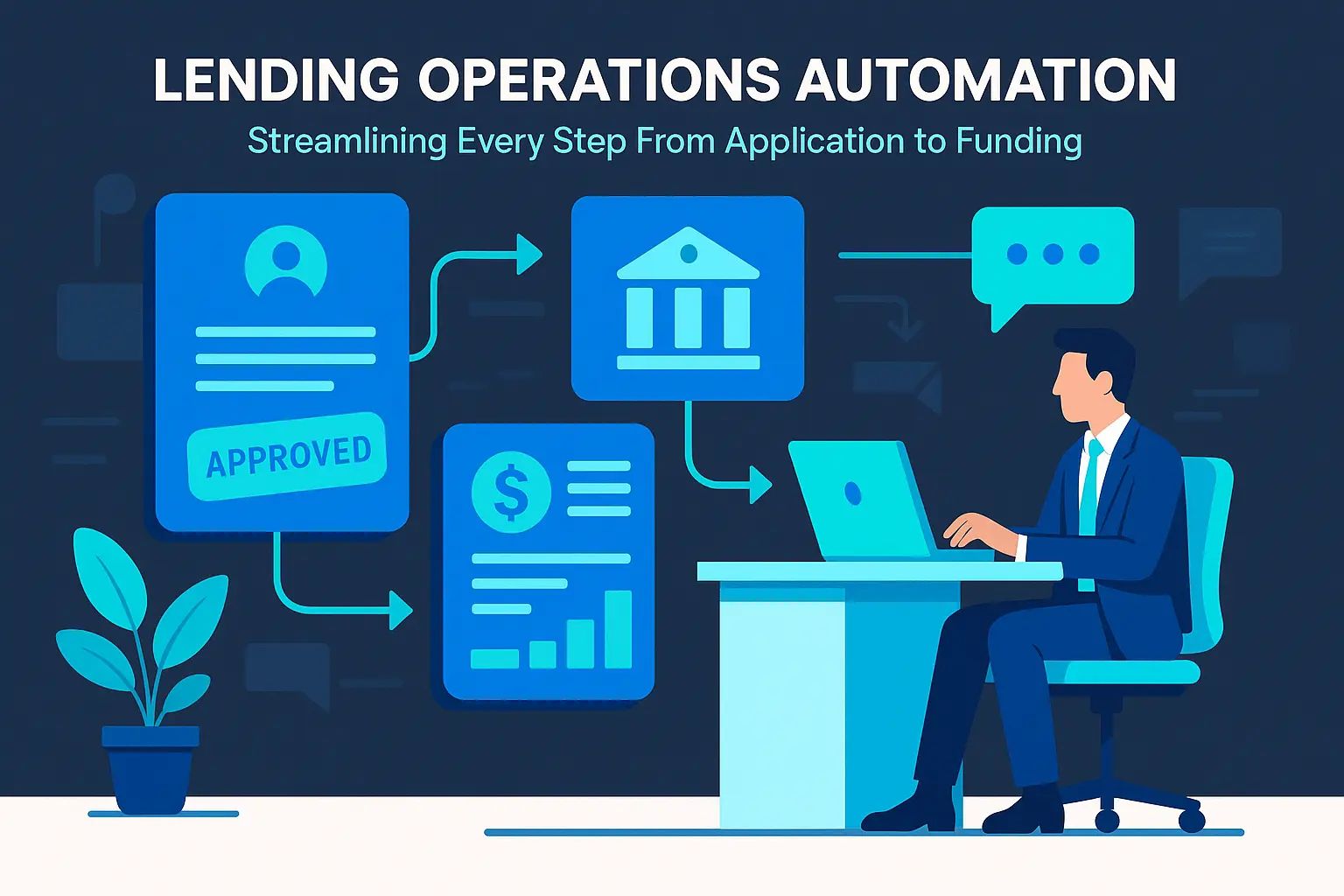
Lending Operations Automation: Streamlining Every Step From Application to Funding
Sofia Rangoni

Feb 27, 2026
What Is Lending Operations Automation?
Lending operations automation means using digital tools to handle every step of the loan process, without printouts, sticky notes, or overflowing inboxes. It’s about swapping out unpredictable manual work for systems that quietly carry out tasks in the background, making decisions and moving files without anyone needing to chase them. This lets lenders spend more time serving real borrowers instead of tracking down paperwork or correcting typos.
Key Features that Define True Automation
A true automated lending platform does more than just digitize forms. It can collect and validate documents as they’re submitted, flag missing information instantly, and trigger background checks or credit pulls. Smart workflows route files to the right department or team member, while lending rules, like policy thresholds or risk scores, are applied automatically, ensuring consistency and speeding up approvals.
Notifications and status updates happen at just the right moment. Tasks that used to stack up, reminder calls, duplicate data entry, document checks, are handled without human intervention. Dashboards present live status at a glance, so nothing gets lost in limbo.
Manual vs Automated Lending: How Processes Differ
Manual lending relies on people to shuffle paperwork, send emails, and enter the same data into different systems over and over. Every handoff adds risk, mistakes slip in, delays compound, and files wait for someone’s attention. Automated lending replaces these risks with precise triggers and steps that move the application from one stage to the next automatically.
Teams can track more loans, faster, and with fewer mistakes. Instead of deadlines missed due to lost paperwork, lenders see bottlenecks clearly and correct them early. In short: automation steps in where human speed, memory, and multitasking fall short, delivering a smoother path from application to funding.
Now that the nuts and bolts of automation are clear, let’s look at the ways these digital tools overhaul the lending journey step by step, for lenders and borrowers alike.
How Automation Transforms Lending Workflows
Automated Document Collection and Verification
No more endless email chains or file uploads riddled with errors. Automated systems request specific documents from applicants, track submissions, and instantly flag missing paperwork. Verification tools cross-check uploaded files, from pay stubs to business licenses, against data sources, slashing approval delays and eliminating tedious manual review.
Smart Data Extraction and Risk Assessment
Automation doesn’t just collect documents; it understands them. AI-powered tools scan uploaded forms, extracting income figures, credit histories, and workplace details with pinpoint accuracy. These extracted details feed directly into risk models, generating real-time risk profiles that help underwriters make swift, data-backed decisions without shuffling papers or copying numbers by hand.
Loan Origination: From Application to Approval
Digital portals and workflow engines guide borrowers through every step, from form submission to eSignatures. Automated systems validate entered data instantly, spot incomplete applications, and push everything to the right teams for approval, often within minutes. Lenders gain a clear, unified view of each application’s status, reducing bottlenecks and ensuring smoother handoffs.
Streamlining Compliance and Regulatory Checks
Changing regulations are a constant challenge for lenders. Automation handles identity validation, anti-money laundering checks, and real-time screening for watchlists in the background, generating a full compliance audit trail. This removes human error from the equation and ensures lenders never miss a critical check, no matter how complex the regulatory landscape gets.
Funding, Disbursement, and Post-Close Operations
Once approved, automation swiftly triggers fund disbursement, reconciles bank details, and documents every step for both the lender and the borrower. From there, post-close workflows, like payment reminders or covenant tracking, run automatically in the background, enhancing transparency and easing the ongoing management of every loan on the books.
With every step, from gathering documents to managing compliance, automation turns what once took days into a well-orchestrated, seamless process. But what does that mean for lenders and borrowers in terms of tangible results? Let's explore the real, measurable benefits this transformation delivers.
Benefits of Lending Operations Automation You Can Measure
Faster Turnaround and Borrower Experience
Lending automation replaces bottlenecks with instant verifications and streamlined reviews. Decisions that once took days can now be delivered in minutes, making borrowers less likely to abandon their applications. Smoother digital journeys also mean fewer touchpoints and less waiting for applicants.
Reducing Errors and Improving Consistency
Hand-keyed information often leads to mismatches, triggering unnecessary rework. Automation tools capture borrower data directly, validate it across systems, and apply uniform rules. This consistency not only raises approval accuracy, but also makes audits and reviews much simpler.
Cutting Operational Costs
With fewer manual steps, teams spend less time on repetitive tasks and more on higher-value analysis. Software-enabled workflows reduce labor hours, trim paperwork requirements, and minimize overhead, including the costs associated with mistakes.
Fraud Detection and Risk Reduction
Automated checks analyze patterns that are hard for humans to spot. Instant cross-references with databases, accounting, credit bureaus, government sources, flag inconsistencies and potential fraud before funding. This early detection shrinks losses and improves portfolio health.
Enabling Scalable Growth
Automation lets lenders handle surges in applications without hiring extra staff or sacrificing quality. As volumes grow, digital workflows scale up with demand, giving smaller teams the muscle to expand their reach and compete with larger organizations.
Seeing the measurable benefits of automation is compelling, but how do these advantages turn into real-world improvements? Let’s look at specific scenarios where lending teams are rethinking their operations from the ground up.
Real-World Use Cases: How Lenders Apply Automation
Automating Small Business Loan Origination
For small business loans, manual steps, from collecting financial statements to verifying ownership, have long slowed things down. Automation changes this by letting applicants securely upload documents, which are automatically scanned for completeness and red flags. Data extraction tools pull key figures directly into the lender's system, helping risk engines assess eligibility within minutes. As a result, credit analyses that once took days now happen in hours, and loan offers can be delivered to businesses before lunchtime.
Faster Home Equity Processing
Home equity lending often stalls with back-and-forth on income proofs, property data, or title checks. Automated workflows collect needed items through secure portals, notify borrowers if anything's missing, then trigger instant verification of employment and property value using third-party data sources. Once a file is complete, underwriting tools review the details, flag outliers, and assemble closing packages almost instantly, letting borrowers tap into their home equity days faster than before.
Commercial Lending Workflows
Large-scale commercial lending involves reams of paperwork, compliance checks, and high-stakes decisions. Here, automation routes applications to the right expert, cross-references client entities against watchlists, and compiles risk reports using current market data. The upshot? Relationship managers spend less time searching for files and more time advising clients, while transaction cycles shrink from weeks to just days.
Seeing how automation drives change in real lending operations highlights what’s possible when bottlenecks are eliminated. Next, it’s helpful to know how to make the right technology choices and get new systems working alongside what you already use.
Choosing and Implementing Lending Automation Solutions
Key Questions to Ask Solution Providers
Shopping for lending automation isn’t just about ticking off a feature checklist. Go deeper. Ask how their platform adapts to regulation changes or custom workflows unique to your lending products. Get clarity on data ownership, know exactly where your borrower data lives, who touches it, and how securely it’s handled. Request frank answers about downtime, customer support response times, and what a real implementation timeline looks like. A quality provider won’t dodge your tough questions.
Integration With Core Banking and Existing Systems
Seamless integration is a dealbreaker. A true lending automation solution should speak the same language as your core banking systems, CRM, and document management tools. Prioritize platforms with robust APIs, webhooks, and clear documentation. Consider the impact on your IT team, solutions that minimize the need for custom code and lengthy middleware cut time, cost, and ongoing headaches. When possible, ask for demonstrations using test data from your own environment to see how integration holds up in the real world.
Training Teams and Tracking Success
No automation rollout succeeds without fully onboarded teams. Look for vendors who offer hands-on sessions tailored to specific job roles, not just generic web tutorials. Prioritize partners who help you map out change management and provide on-demand learning. Once live, make sure you tie KPIs to your automation investment: think processing speed, error rates, and customer satisfaction. Dashboards that surface this data in real time can spotlight quick wins and areas for adjustment.
Choosing the right automation solution is only part of keeping your lending business at the forefront. Even bigger changes are coming to lending operations, think smarter AI and deeper personalization, so it’s worth keeping an eye on what’s emerging next.
The Future of Lending Operations: What’s Next in Automation?
AI and Machine Learning in Credit Decisioning
The next wave of lending automation hinges on artificial intelligence. Instead of relying solely on static rules or limited credit models, lenders are leveraging machine learning to analyze vast pools of data, employment history, transaction patterns, alternative financial metrics, even written borrower communications. These AI-driven insights enable more nuanced risk assessment and better identification of reliable borrowers who might not fit traditional profiles. With every new application processed, machine learning algorithms sharpen, improving accuracy and significantly reducing decision times.
Expect to see continuous learning systems that adapt quickly to economic shifts, automate policy tweaks, and spot emerging patterns of fraud or delinquency in real time. It’s not science fiction: leaders in digital lending are already piloting systems that score, verify, and underwrite in minutes, not days, with fewer manual touchpoints than ever before.
Omnichannel, Customer-Centric Lending Journeys
Borrowers expect the same seamless experience, whether they start a loan application online, over the phone, or in a branch. Automation will dissolve the silos between channels, allowing data and workflows to follow the customer from one touchpoint to the next. This means loan officers and applicants can pick up where they left off, regardless of the device or platform. Personalized nudges, document requests, and approval updates will arrive via SMS, email, or app, all automatically generated and tracked.
As automation matures, lenders will be able to tailor product offers, communications, and loan terms dynamically, responding to real-time customer behavior and shifting needs. Imagine a borrower receiving a pre-qualified offer at the exact moment they show intent, all powered by predictive analytics working quietly in the background.
These breakthroughs are already reshaping the way financial institutions operate, but the real difference lies in how automation makes lending more human and responsive. Looking ahead, innovators will set themselves apart not just by adopting new tools, but by reimagining the entire customer journey, from first touch to final disbursement. Next, we’ll explore how to turn these ambitious ideas into reality, starting with practical steps you can take today to choose and implement the right automation solutions.






💚 Don’t get left behind
Ready To Join The Circular Movement?
United for a smarter shopping experience and a better planet