
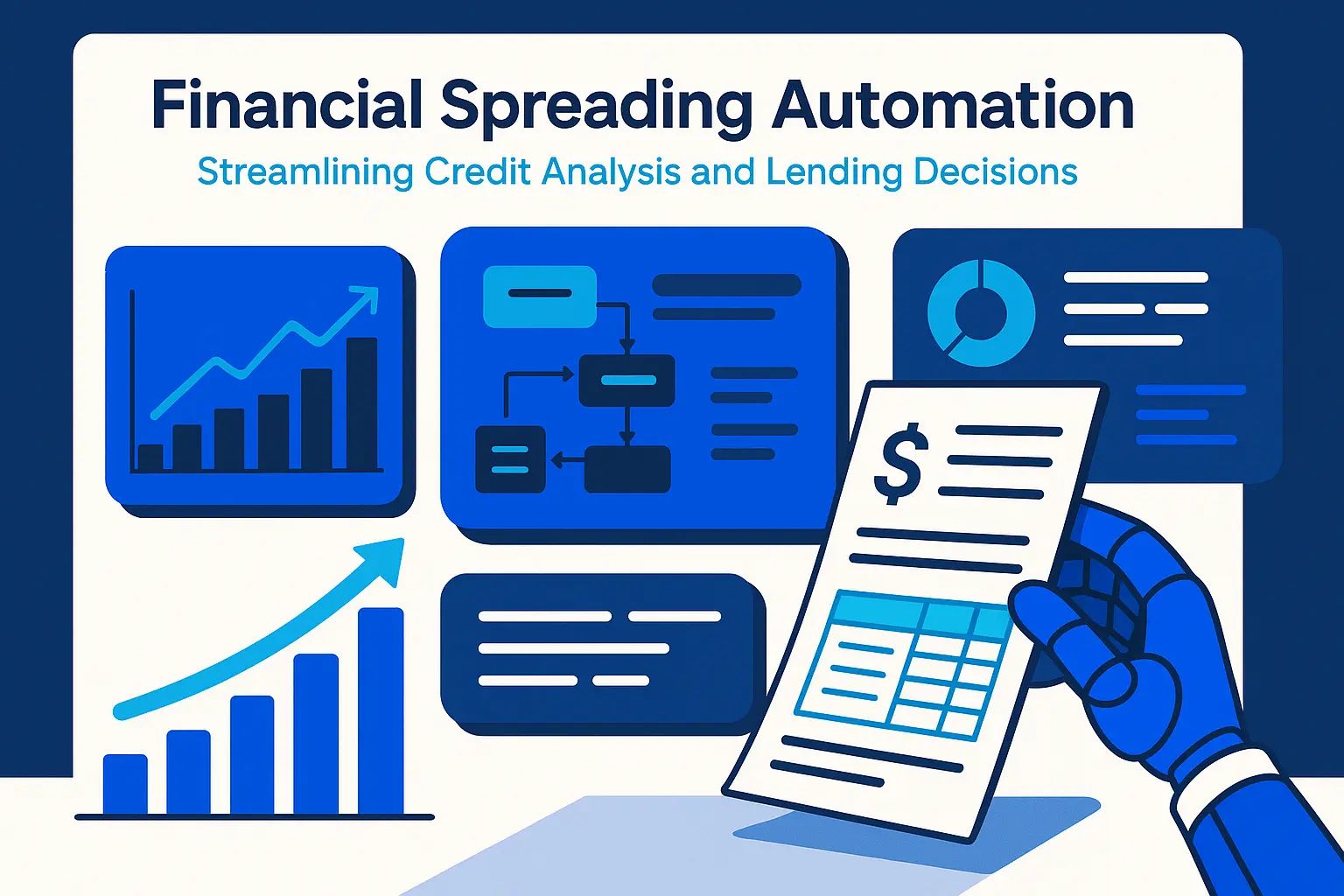
Financial Spreading Automation: Streamlining Credit Analysis and Lending Decisions
Sofia Rangoni

Feb 4, 2026
What is Financial Spreading Automation?
Financial spreading automation replaces the tedious process of manually extracting and inputting data from financial statements into structured formats. Instead of relying on spreadsheets and repetitive copy-paste actions, automation harnesses software and advanced data tools to capture, organize, and analyze financial data swiftly and accurately.
Manual vs. Automated Spreading, Key Differences
In a manual approach, analysts comb through pages of PDFs, tax returns, or scanned documents, transcribing each line item into spreadsheets. This task demands constant vigilance to avoid data entry mistakes, and even small errors can snowball into significant risk during credit evaluation. Manual spreading is labor-intensive and often delays credit decisions.
Automated spreading systems, by contrast, read and extract relevant line items from various financial documents. The software intelligently maps data points to standard templates, flagging inconsistencies for review and ensuring consistency across datasets. This transformation radically shortens turnaround times and frees analysts from routine data chores.
How Automation Works: Behind the Technology
At its core, automation systems leverage technologies such as Optical Character Recognition (OCR), artificial intelligence, and machine learning. OCR scans and digitizes printed or handwritten financial documents, converting them to machine-readable text. AI and machine learning technologies then interpret context, classify financial fields, and learn from corrections to improve accuracy over time.
Cloud-based solutions enhance collaboration, enabling multiple users to access shared financial data in real-time while maintaining strict audit trails. Some platforms go further, connecting directly with accounting software and banking systems to pull data at the source, minimizing manual handling and streamlining data validation.
Understanding how automation reshapes spreading sets the stage for a closer look at the limitations of traditional, manual processes, and why financial institutions are moving away from them.
Challenges with Traditional Financial Spreading
Common Bottlenecks in Manual Processes
Traditional financial spreading relies on staff painstakingly extracting figures from financial statements and inputting them into spreadsheets or systems. This process is tedious, time-consuming, and leaves plenty of room for mistakes. Even a missing digit or misplaced decimal point can cause major discrepancies downstream.
Inconsistencies abound when multiple analysts each use their own templates or interpretation methods, creating confusion and slowing down reviews. Checking, rechecking, and reconciling discrepancies eats up valuable time, especially when statements arrive in various formats, from scanned PDFs to spreadsheets with nonstandard layouts.
Impact on Loan Origination and Credit Risk
These manual pain points directly impact how quickly loan applications are processed. Credit officers often wait days (sometimes weeks) for accurate spreads, delaying decisions for borrowers and frustrating relationship managers. Worse, rushed analyses or unchecked errors introduce risk, banks may unknowingly approve loans based on incomplete or faulty spreads.
Since key insights are trapped in static documents, it's tough to surface emerging risk trends or act on portfolio signals in real time. Compliance is another concern. When auditors or regulators request supporting data, cobbling together everything from scattered files can be a scramble.
These persistent roadblocks are why more lenders are exploring alternatives that lighten the manual workload. Let’s examine how a new approach is changing the game for credit analysis.
Key Benefits of Automating Financial Spreading
Speed and Turnaround Time
Automation rapidly converts raw financial documents into structured formats, shaving hours or even days off the credit analysis process. Quick access to organized data allows lenders to make lending decisions sooner, which can be the difference between closing a deal or losing it to a competitor.
Consistency and Error Reduction
Manual data entry often leads to typos, skipped fields, and inconsistent formats. Automation follows the same logic and standards every time, cutting out variability and significantly lowering the chance of mistakes that might distort credit ratings or risk assessments.
Improved Data Insights for Lenders
Automated systems can instantly analyze large volumes of financials and highlight trends or outliers that are easily overlooked in manual reviews. This empowers credit teams to spot warning signals, benchmark clients, and tailor their risk models with more precise information.
Scalability for Growing Portfolios
As lending volumes expand, adding more loans no longer means a linear increase in manual work. Automation handles seasonal spikes and long-term growth, making it practical to service a larger, more diverse client base without slowing down or hiring extra staff.
Understanding these advantages lays the groundwork for selecting technology solutions that feature the core capabilities necessary for modern credit analysis.
Core Features to Look for in Automation Solutions
Data Extraction and Accuracy
Modern automation tools read financial statements from PDFs, spreadsheets, and sometimes even scanned images. Optical Character Recognition (OCR) is the start, but superior solutions combine OCR with AI, pulling out line items, calculations, and context with minimal manual correction. Look for solutions that highlight and flag data uncertainties, not just import numbers blindly, ensuring reliability in every spread.
Integration with Existing Systems
Few organizations want to rip and replace their entire technology stack just for automation. Instead, a robust solution should connect with your current loan origination, risk rating, and core banking platforms through APIs or seamless file import/export options. This bidirectional flow cuts down on swivel-chair work and keeps everyone working from up-to-date information.
Customizable Spreading Templates
No two banks or lenders have identical reporting requirements. The flexibility to build or modify financial templates, accommodating industry-specific metrics or custom account groupings, is crucial. Reusable templates help standardize underwriting while adapting to firm policy or regulatory guidelines as needed.
Covenant Tracking and Monitoring
Automated solutions shine when they don’t just spread financials but actively monitor loan covenants, flagging potential breaches before they occur. Built-in dashboards and automated alerts transform static reports into dynamic oversight tools, enabling proactive loan monitoring and deeper risk mitigation.
Understanding these essential features lays a strong foundation as we explore how financial professionals put automation into action within their credit and lending processes.
How Financial Institutions Use Spreading Automation
Credit Assessment Workflows
Banks and lenders use automated spreading to speed up the review of applicants' financial statements. Instead of laboriously entering data from balance sheets and income statements by hand, automation pulls relevant figures directly from documents, PDFs, spreadsheets, and scanned statements, and standardizes them within seconds. This allows credit analysts to dedicate their time to deeper analysis, catching trends or red flags that might otherwise go unnoticed in a manual slog. As a result, loan officers can present funding recommendations based on fresher, more accurate data, reducing the time it takes to move from application to approval.
Regulatory Reporting
Financial regulations require precise and timely reporting of credit exposures and risk factors. Automating the financial spreading process ensures that data from dozens, or even hundreds, of borrower accounts can be aggregated and formatted for regulatory filings without manual reconciliation. This not only cuts down on late-night compliance crunches, but also helps institutions respond quickly to audits or data requests. With consistent, automated processes in place, regulatory teams can trust the numbers they submit, and free themselves from error-prone spreadsheet gymnastics.
Portfolio Monitoring
Lending institutions must keep a close eye on the health of their portfolios as economic and market conditions shift. Spreading automation makes it feasible to refresh financial profiles for all clients, not just the highest-risk ones. Automated workflows can flag deteriorating cash flow, sudden debt increases, or breaches in loan covenants in near real-time. This enables portfolio managers to address potential risks earlier, adjust credit terms, or proactively work with clients to avoid defaults. The result: a more resilient loan portfolio and stronger client relationships.
With a clear view of how automation is transforming daily operations, the next step is to understand what it takes to successfully integrate these tools into your existing systems and teams.
Best Practices for Implementing Financial Spreading Automation
Choosing the Right Technology
Selecting a financial spreading automation platform isn’t about picking the shiniest option. Examine how well the tool handles financial statement formats you encounter day-to-day, whether it easily connects to your existing credit systems, and if it supports custom data fields required for your lending practices. Prioritize solutions proven to process documents with diverse layouts and languages. Ask for hands-on demos using your real documents to see accuracy in action before committing.
Ensuring Quality Data Inputs
Automation thrives on clean, consistent data. Before rolling out a new system, review your document intake and scanning processes. Establish clear guidelines for document types and quality, and set up pre-validation checks for missing pages or blurred images. When possible, standardize the naming and structure of the files your team processes. Consistency at this stage minimizes rework and exceptions later in the workflow.
Staff Training and Adoption
No technology delivers results if the team doesn’t buy in. Train staff not just on how to use the new system, but also why processes are changing. Hold walk-through sessions using actual deals and encourage questions on possible exceptions or manual overrides. Recognize and address skepticism by showing concrete examples of reduced errors or time saved. Enable a feedback loop so staff can flag issues early and suggest improvements that further smooth adoption.
By setting a strong foundation tailored to your portfolio and people, automation becomes a catalyst rather than a disruption. Up next, we’ll explore examples of how these best practices translate into measurable changes for financial institutions.
Real-World Outcomes: Case Examples
Reduced Turnaround in Loan Processing
Community Advantage Bank in Minnesota faced chronic backlogs during peak lending seasons. Before automation, staff spent hours rekeying and verifying customer financials. After implementing automated spreading, the average turnaround on a commercial loan package shrank from five business days to less than 24 hours. The lending team was able to focus on direct client engagement and market expansion instead of intensive manual input. Bankers reported higher customer satisfaction, as faster loan decisions made their small business clients more competitive.
Fewer Spreading Errors and Data Issues
A mid-sized credit union in Georgia noticed recurring inconsistencies in annual reviews, leading to rework and compliance headaches. By adopting automated spreading tools, error rates on data entries dropped by over 70% within six months. The system flagged unusual entries and highlighted missing documentation automatically, allowing credit analysts to spend more time on complex cases instead of chasing down errors. As a result, regulatory audits became less stressful, and loan default predictions proved more reliable.
These real-world shifts, faster processing and more dependable data, demonstrate the practical value of automation. But, to make automation sustainable and truly transformative, institutions must understand emerging developments just over the horizon.
Future Trends: AI and Financial Spreading Automation
Natural Language Processing for Financial Documents
Natural Language Processing (NLP) is transforming how lenders extract, categorize, and interpret unstructured financial data. Imagine a platform that instantly parses scanned tax returns, footnotes in financial statements, or even handwritten cash flow summaries. By teaching AI to “read” the way a seasoned analyst would, these systems not only pluck out key numbers but also catch subtle changes in language, like shifting risk factors or one-off adjustments buried deep in an earnings report. The result? Financial data becomes machine-readable and immediately actionable, even when source documents are anything but uniform.
End-to-End Workflow Automation Possibilities
AI is pushing automation well beyond data extraction. Some platforms now handle every step: pulling documents, auto-spreading, validating exceptions, and routing results for review. As models mature and integrate with bank core systems, it’s becoming possible to generate real-time risk grades or lending decisions from a single upload, shrinking bottlenecks that once took days or weeks. In the near future, AI-powered tools could anticipate missing documentation, flag inconsistent entries, or suggest remediation plans for credit analysts, making lending workflows faster and more proactive than ever.






💚 Don’t get left behind
Ready To Join The Circular Movement?
United for a smarter shopping experience and a better planet