
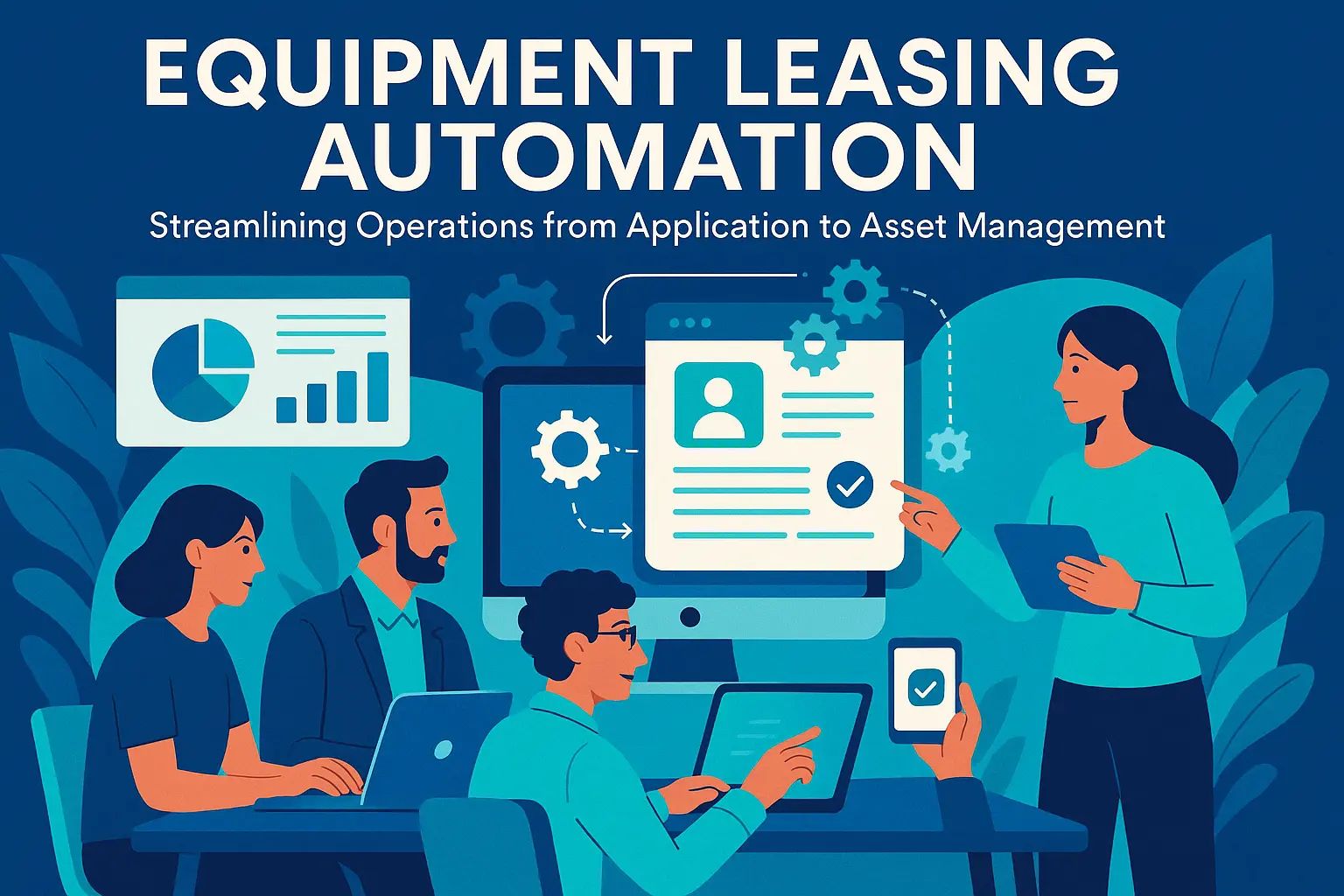
Equipment Leasing Automation: Streamlining Operations from Application to Asset Management
Sofia Rangoni

Feb 11, 2026
What Is Equipment Leasing Automation?
Equipment leasing automation refers to using digital tools to replace paperwork, repetitive tasks, and manual oversight throughout the equipment leasing process. Instead of relying on phone calls, spreadsheets, and stacks of documents, businesses use platforms that bring together the steps of choosing equipment, submitting applications, approving contracts, managing payments, and tracking assets, all in one digital workspace.
Key Features of Automated Leasing Platforms
Modern leasing automation platforms go far beyond document storage. They feature online application forms that capture data directly, real-time credit assessment engines, automated contract generation, e-signature functionality, and payment tracking dashboards. Many systems offer proactive reminders, mobile access, electronic document sharing, and audit trails, giving both lessors and lessees full visibility and control from start to finish.
How Automation Fits into Equipment Leasing Workflows
Automation weaves through every stage of leasing, connecting the dots between application, approval, activation, and ongoing management. When a leasing workflow is automated, bottlenecks caused by manual reviews or missing paperwork disappear. Instead, data moves smoothly between systems, credit checks happen instantly, contracts are generated and signed in minutes, and every transaction is logged for future reference. Even post-lease activities like equipment returns and renewals go more smoothly, with fewer hiccups and less chasing people for signatures or information.
Understanding the nuts and bolts of this digital transformation helps explain why so many equipment lessors and lessees are turning to technology. Next, we’ll dig into the real changes automation brings to every step of the leasing process, from first contact with a customer to managing assets after the deal is done.
How Automation Transforms the Equipment Leasing Lifecycle
Faster Origination: Digital Applications and Approval
Paperwork and phone calls have long slowed down equipment lease origination. Automation clears the backlog, letting applicants submit digital forms in minutes and track their requests online. Submission data flows straight into underwriting portals, virtually eliminating the need for manual entry. As a result, approvals that once took days now happen in hours, or less, and dealers can move equipment faster than ever before.
Automated Credit and Risk Assessment
Risk checks no longer require back-and-forth emails or spreadsheet juggling. Automated platforms tap into multiple data sources for real-time credit pulls, financial ratio analysis, and red-flag detection. This hands-off process minimizes bias while flagging outliers for human review when needed. Lenders gain fast yet thorough insight into each applicant’s risk, allowing for more accurate pricing and fewer costly surprises down the line.
Seamless Lease Management and Payments
Ongoing lease management is a headache when handled manually. Automation streamlines everything, from automatically generated invoices to scheduled payment reminders. Integrated payment gateways receive funds, reconcile transactions, and alert staff when intervention is necessary. Lessees can monitor payment history and download statements at any time, boosting clarity and confidence for everyone involved.
Asset Tracking and End-of-Lease Processes
It’s easy to lose track of hundreds, or thousands, of assets scattered across locations. Automation assigns unique identifiers to each leased item and logs their locations, maintenance dates, and status updates in real time. When a lease nears its end, the system alerts stakeholders, triggers inspection workflows, and manages return or buyout procedures without missed steps or lost hardware.
This transformation doesn’t just clear bottlenecks; it reshapes expectations for what an efficient leasing operation can look like. Next, let’s explore how these improvements translate into practical advantages for businesses on the ground.
Business Benefits of Automating Equipment Leasing
Lower Costs and Fewer Errors
Replacing manual steps with automation dramatically reduces paperwork, double-entry, and human mistakes. Automated calculation of payment terms, asset depreciation, and tax schedules minimizes costly slip-ups that can happen with spreadsheets or emails. The result: fewer hours spent on repetitive tasks and a lower bill from auditors cleaning up after minor (but expensive) oversights.
Improved Customer Experience
Automated workflows enable digital applications, faster approval decisions, and simple document signing, all on the customer’s timeframe. This eliminates long waits for responses or confusion around next steps. Customers immediately feel the difference, with clarity throughout the leasing journey and faster delivery of their equipment.
Enhanced Compliance and Security
Staying compliant with financial regulations is easier when automation ensures every contract, payment, and communication is logged and stored systematically. Modern platforms also embed user permissions and encryption, so customer data doesn’t get exposed. This not only keeps auditors happy, but also gives customers peace of mind that their information is protected.
Understanding how these technologies power the automation behind equipment leasing paints a clearer picture of how to move your operations forward. Up next, let’s look under the hood at the specific tools and systems that make these operational gains possible.
Technologies Powering Equipment Leasing Automation
Behind the scenes of seamless equipment leasing are advanced technologies that remove bottlenecks and add accuracy at every stage. Let’s explore the key innovations making automation possible.
AI and Machine Learning for Underwriting
Traditional credit assessments often take days of manual paperwork and guesswork. With artificial intelligence and machine learning, leasing platforms can analyze applications, credit histories, and financial data instantly. Algorithms spot risks, flag inconsistencies, and accurately score applicants, often in seconds. This means faster approvals for creditworthy clients, and a sharper eye on potential red flags.
eSignatures, Digital Contracts, and Smart Documents
Physical paperwork can delay deals and introduce errors. Modern leasing platforms replace paper trails with digital contracts powered by secure eSignature technology. These documents aren’t just static files, they’re “smart” and can trigger workflows, send automatic reminders, or adapt to regulatory requirements. This creates a smooth, auditable agreement process that closes deals without courier delays.
APIs for Integrating Finance, Accounting, and Asset Systems
Leasing automation rarely operates in isolation. APIs connect leasing platforms directly with banks, ERP software, and asset management tools. This means no more importing spreadsheets, re-entering lease data, or chasing missing payment information. Seamless integration ensures consistent information flows from application through payment, renewal, and asset tracking, saving time and reducing costly errors.
With the right mix of intelligent technologies in place, equipment lessors can focus less on administrative tasks and more on building strong, lasting relationships. Now, let’s turn to how organizations can take practical steps to bring automation into their own leasing workflows.
Getting Started: Steps to Automate Your Leasing Workflow
Assessing Your Current Process
Before swapping manual tasks for automation, take a close look at how your current leasing process works. Map every touchpoint, from initial inquiry through asset return. Pay attention to handoffs, who does what, when, and with which tools? This step reveals dependencies and gives you a real baseline to improve upon.
Identifying Bottlenecks
Review your workflow for slowdowns and recurring headaches. Is duplicate data entry eating up hours? Are contracts stuck in endless email threads? Pinpoint spots where deals pause, errors multiply, or information gets lost. Make note of areas where your team struggles to keep up, as these are prime candidates for automation gains.
Selecting the Right Automation Tools
With a list of pain points in hand, look for platforms tailor-made for equipment leasing. Focus on solutions that can handle digital applications, automate document generation, and sync with accounting, CRM, and asset tracking systems. Test drive a few tools using real use cases, don’t just rely on demo videos or sales slides. Choose software that fits your current needs but also scales as you grow.
Once you’ve got the groundwork set, it helps to see how other companies made the leap from manual to automated. The next section highlights real-life stories to inspire your own transformation.
Real-World Examples: Companies Winning with Leasing Automation
Smarter Approval Times
A regional construction equipment lessor, BuildFast, struggled for years with slow approvals, often taking several days to process a single lease request. By introducing automation, the company streamlined its application review, digitizing identity checks, income verification, and document collection. As a result, clients began receiving approvals in under an hour. This speed didn’t just impress customers; it allowed sales teams to close deals before prospects looked elsewhere, leading to a notable uptick in contract volume. Customer reviews soon reflected the difference, highlighting the relief of skipping paperwork headaches and gaining rapid access to needed equipment.
Another standout, a national trucking lessor, moved to an automated credit assessment platform. Their system analyzes thousands of data points from public records and internal scoring models, flagging only risky deals for manual review. The number of pending lease applications dropped by 80% overnight, and the company now promises “decision in 15 minutes” for standard applications, a claim their competitors struggle to match.
Fewer Disputes and Faster Payments
OfficeFlex, a company specializing in technology asset leasing, faced recurring headaches from billing errors and misapplied payments,disputes that tied up staff and delayed revenue. By switching to a platform that automatically reconciles payment records and syncs lease terms to their accounting system in real time, OfficeFlex saw payment disputes decrease by 60% within just a few months. Clients now receive clear, accurate invoicing and the accounts receivable team spends far less time chasing corrections.
A mid-sized agriculture equipment lessor tackled late payments by introducing automated reminders and self-service payment portals. This one change cut overdue receivables in half. Customers appreciate the transparency and control, and teams spend their time improving customer relationships, not tracking down unpaid bills.
As these examples show, the right approach to automation can boost not just efficiency, but trust with clients and partners, essential ingredients for scaling any leasing operation. Up next, we’ll break down how to confidently evaluate and select the best-fit automation solution for your business.
Choosing an Equipment Leasing Automation Solution
Essential Criteria to Consider
Before diving into product demos or sales pitches, narrow your focus by clarifying what your equipment leasing process actually needs. Consider key points like how easily the solution connects with your existing accounting systems, CRM, or asset tracking tools. A good fit will let you automate data transfers, eliminating manual entry and reducing the chance for errors.
Next, look for customizable workflows. The right solution won’t force your team into a rigid process, it will flex to match your approval chains, document flows, and lease variations. Self-service options for applicants can also cut down on back-and-forth, making the experience faster for customers and your staff.
Security shouldn’t be an afterthought. Verify that the platform encrypts sensitive data, complies with data protection rules, and offers granular user permissions. If your team works from various locations, ensure the solution supports remote access without sacrificing control or oversight.
Evaluating Vendors and Platforms
Once you’ve outlined your needs, compare vendors by looking beyond feature lists. Ask for real-world examples that align with your equipment types, business volume, and region. How have other companies in your niche handled implementations, and what support did they receive post-launch?
Dig into the upgrade roadmap: Will the vendor keep the product updated to meet changing regulations or new technologies? Is there a knowledgeable support team, and do they respond quickly when issues arise?
Don’t underestimate hands-on testing. Pilot a small lease process with top contenders to catch hidden friction points. Involve both back-office staff and front-line users to get their feedback on navigation, speed, and general usability.
By carefully scoping requirements and testing how solutions perform in your real day-to-day tasks, you lay the groundwork for smoother automation.
Now that you've zeroed in on the selection process, let's take a forward look at where automation in leasing is headed, and what trends might shape your next upgrade.
The Future of Equipment Leasing: What to Expect Next
Predictive Analytics and Embedded Leasing
Tomorrow’s equipment leasing platforms won’t just automate, they’ll anticipate. Predictive analytics, fueled by deep machine learning, is set to transform how businesses qualify applicants, price leases, and even forecast asset lifecycle events. Instead of reacting to late payments or equipment downtime, platforms will flag risks before they happen, automate next actions, and empower lessors to optimize portfolio health in real-time.
Meanwhile, embedded leasing, offering lease options directly inside equipment marketplaces or supplier portals, will dramatically shorten sales cycles. Imagine browsing a forklift supplier’s website and receiving a tailored leasing rate in seconds, pre-approved and ready to close, without ever picking up the phone. These frictionless experiences will become the norm as APIs connect lenders, brokers, and equipment vendors in a seamless digital flow.
Sustainability and ESG in Leasing Automation
The next generation of leasing automation tools will also take on sustainability head-on. Automated systems will track carbon footprint, monitor energy efficiency of leased assets, and make compliance with emerging ESG (Environmental, Social, and Governance) standards frictionless. As regulators and investors demand more transparency, platforms will surface actionable insights: which assets are recyclable, which lessees factor environmental impact into decisions, and how each lease contributes to broader ESG goals.
Expect environmental criteria to inform credit scoring, asset selection, and end-of-life management. For equipment lessors, standing out will mean more than just speed; it will require helping customers operate cleaner and smarter.



💚 Don’t get left behind
Ready To Join The Circular Movement?
United for a smarter shopping experience and a better planet