
Equipment Finance LOS: Streamlining Equipment Lending with Modern Loan Origination Systems
Sofia Rangoni

Feb 24, 2026
What Is an Equipment Finance LOS?
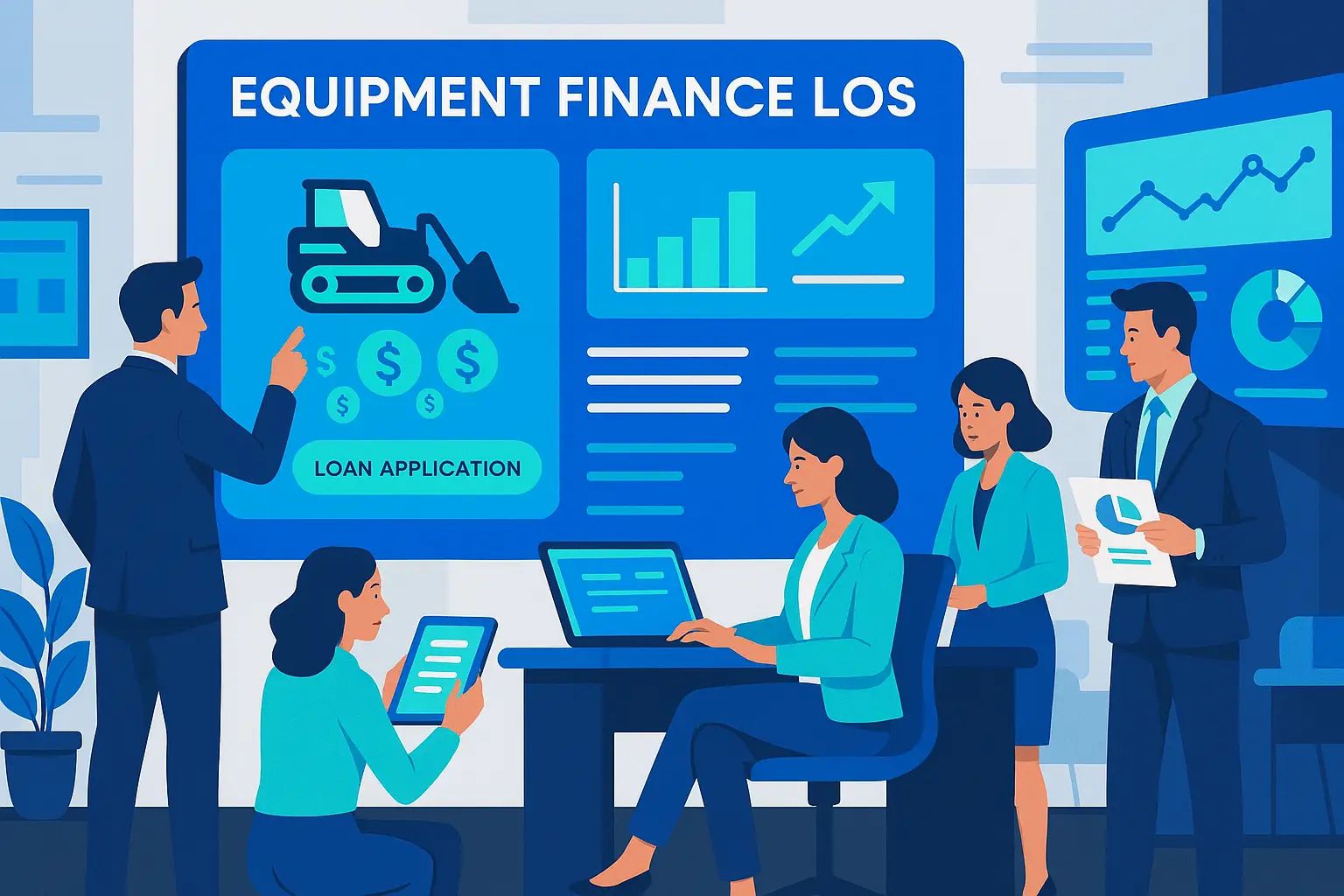
An Equipment Finance Loan Origination System (LOS) is a specialized digital platform designed to manage and automate the entire lifecycle of equipment financing. Unlike traditional lending tools, this type of system accommodates the unique demands of equipment finance, where loans or leases are secured by everything from heavy machinery to medical devices and commercial vehicles.
Key Functions in Equipment Finance
At its core, an equipment finance LOS handles the stages involved in originating equipment loans and leases. This includes application collection, applicant data validation, credit review and scoring, document generation, e-signature capture, and compliance management. Equipment finance transactions often involve complex structures, such as multi-asset schedules, step payments, balloon payments, or seasonal payment plans, which are natively supported by a purpose-built LOS.
How LOS Differs from General Loan Origination Software
General loan origination systems are widespread in consumer and small business lending, but they don’t always fit the nuances of equipment finance. A dedicated equipment finance LOS considers factors like asset inspection, collateral tracking, and intricate vendor-partner workflows. For lenders who specialize in equipment, this distinction matters, a generic LOS might struggle with asset-level customization, scheduling flexibility, and the specialized documentation required in this niche.
Understanding this dedicated approach sets the stage for a closer look at how such a system operates from onboarding to funding, and what makes it essential for modern equipment lenders.
How an Equipment Finance LOS Works
Application Intake and Digital Onboarding
The process begins with a digital portal where borrowers submit their equipment loan applications. Instead of sifting through paper forms and email attachments, applicants upload business credentials, financials, and equipment details directly to the system. This eliminates manual entry and enables real-time status updates, so both lenders and borrowers see progress instantly.
Automated Credit Decisioning
Once the application is in the system, the loan origination software pulls credit bureau data, scores applicants based on custom risk criteria, and runs compliance checks, often within minutes. Automation here ensures each applicant is evaluated consistently, reducing delays and increasing transparency in credit decisions.
Document Management and Data Validation
Modern LOS platforms automatically gather, store, and organize the required documents. Built-in validation tools check for completeness and flag missing or inconsistent information before it reaches underwriting. This shrinks the room for errors, minimizes back-and-forth requests, and speeds up the review process.
Integration with Core Lending and CRM Systems
Perhaps the biggest strength of today’s LOS technology lies in its ability to connect with accounting platforms, core banking, e-signature solutions, and CRM tools. This means that everything from payment scheduling to customer communications runs smoothly, without manual handoffs or data re-entry. The result is a fully connected lending workflow.
With a clear understanding of how these systems operate, it becomes easier to see the tangible improvements they bring to the equipment financing journey, both for lenders and for their clients.
Benefits of an Equipment Finance LOS
Faster Loan Processing and Approval
An equipment finance LOS slashes turnaround times by digitizing every stage of the process. With streamlined workflows and instant access to data, underwriters can review and approve applications within hours, not days. Real-time status updates keep teams in sync, so nothing falls through the cracks. This speed helps lenders respond quickly to market opportunities, and customers who expect instant results.
Reduced Manual Errors and Compliance Risks
Paper trails and manual data entry are breeding grounds for mistakes. A modern LOS validates data at every step and auto-generates required disclosures and compliance documents. Built-in audit trails capture changes, so issues are identified and resolved fast. Lenders avoid costly errors, regulatory headaches, and the inefficiencies that come from chasing paperwork.
Improved Customer and Partner Experience
Easy digital onboarding means that customers and equipment vendors can complete applications and upload documents from anywhere. Automated notifications keep everyone in the loop. This frictionless process builds trust and loyalty, key advantages in any competitive market. Equipment vendors and dealers also get access to live updates, making their jobs easier and improving the overall lending ecosystem.
Understanding these core advantages sets the stage for choosing a system that fits your lending business, where specific features, integration capabilities, and ongoing security play crucial roles. Let’s explore what to look for when evaluating solutions.
Choosing the Right Equipment Finance LOS
Key Features to Look For
Not all loan origination systems fit the unique demands of equipment financing. Prioritize solutions that handle end-to-end workflows, from online application through funding. Built-in automated credit analysis, digital document collection, and e-signature support are essentials. Real-time status updates and customizable workflows can make life much easier for both your lending team and your customers.
Customization and Scalability
Every equipment lender’s process is slightly different, which is why a one-size-fits-all LOS never works for long. Opt for a solution that adapts to your products, whether you handle small-ticket commercial loans or large, structured finance deals. Scalable architecture is also non-negotiable: as your portfolio grows, your LOS should accommodate new users, higher volumes, and evolving regulatory requirements without missing a beat.
Security, Compliance, and Data Privacy
Equipment finance deals with sensitive data, from financial records to personal identifiers. A reliable LOS uses strong encryption, multi-factor authentication, and offers audit trails for every action. Look for platforms with built-in compliance monitoring for relevant regulations, such as GLBA or GDPR, and features that make regulatory reporting painless. Data residency and privacy controls are especially critical if you do business across jurisdictions.
With the right criteria in place, selecting your LOS becomes less about checking boxes and more about building the foundation for an efficient, future-ready lending operation. Once you’ve made your choice, preparing your team and workflows for implementation is the next key step in the journey.
Implementing an Equipment Finance LOS: Best Practices
Change Management and Team Training
Rolling out a new loan origination system changes how your team works every day. Early conversations with staff about why the new LOS is needed, and what pains it will solve, build both trust and buy-in. Rather than overwhelming users with every feature, focus training on the daily tasks they’ll perform in the system. Encourage questions and gather feedback as teams get hands-on with the platform, so you can quickly fix stumbling blocks and keep momentum high.
Integrating with Existing Systems
An equipment finance LOS isn’t an island. Loan officers, underwriters, and accountants all rely on existing CRM, core lending, and doc management tools. Prioritize two-way data flows that let your LOS exchange information automatically with these systems. Start integration with the most critical connections, such as customer data syncing, and add complexity after you’ve nailed the basics. Opt for APIs, not brittle manual uploads or downloads, to keep everything running smoothly even as your business grows.
Measuring ROI and Process Improvements
Knowing if your investment was worthwhile means tracking the right benchmarks before and after LOS deployment. Keep tabs on application cycle times, the number of manual touchpoints removed, error rates, and borrower satisfaction. Don’t wait for annual reviews, set up dashboards or weekly reporting so you can spot bottlenecks or wins as soon as they appear. Compare metrics with your original expectations and use what you learn to fine-tune workflows, ensuring continued gains long after launch.
Once the implementation groundwork is solid, it’s important to anticipate the questions lenders and stakeholders often raise as they adapt to new equipment finance technologies. Let’s explore some of those common queries and clear up any lingering uncertainties.
FAQs on Equipment Finance LOS
Can a LOS Handle Different Types of Equipment Loans?
Yes, most equipment finance LOS platforms are designed to support a wide range of financing structures, such as leases, term loans, lines of credit, and seasonal payment plans. Flexible configuration options let lenders tailor products, approval paths, and document requirements for different kinds of equipment, industries, and borrower profiles.
How Long Does Implementation Typically Take?
Implementation time depends on complexity, integrations, and how much customization is required. For out-of-the-box LOS solutions, deployment might be as quick as a few weeks. Rolling out a highly customized platform, especially when connecting to legacy systems, could extend the timeline to several months. Early planning and clear requirements can significantly reduce delays.
What Is the Cost Range for Equipment Finance LOS Solutions?
Pricing varies widely. Subscription-based cloud platforms may start at a few hundred dollars monthly per user, while comprehensive enterprise implementations could involve upfront fees, licensing, and ongoing maintenance, sometimes reaching six figures per year. Factors like the number of users, level of automation, desired integrations, and support all influence total cost.


💚 Don’t get left behind
Ready To Join The Circular Movement?
United for a smarter shopping experience and a better planet