
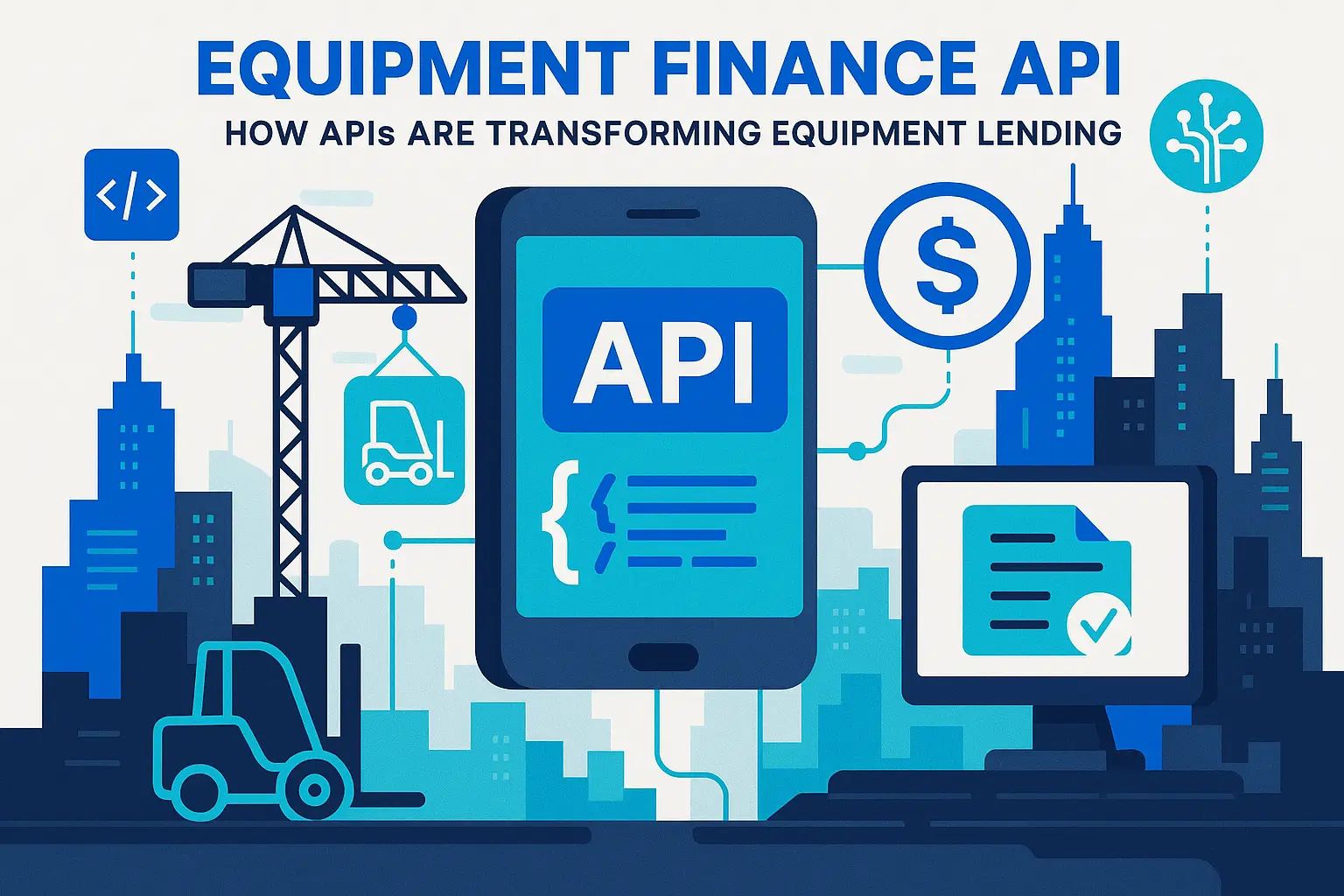
Equipment Finance API: How APIs are Transforming Equipment Lending
Sofia Rangoni

Jan 26, 2026
What Is an Equipment Finance API?
An Equipment Finance API is a set of digital tools that allow different financial platforms, lenders, equipment vendors, and business users to communicate seamlessly. Instead of relying on email chains, phone calls, or manual paperwork, an API acts as an instant bridge, sharing loan application data, credit approvals, contract details, and status updates in real time.
Core Functions of an Equipment Finance API
At its core, an Equipment Finance API does the heavy lifting in the background. It automates application submissions, credit scoring, and document management. APIs retrieve customer profiles, calculate payment terms, trigger compliance checks, and deliver funding decisions without delay. Every action happens behind the scenes, giving borrowers and vendors a smooth, fast, and transparent financing process.
How APIs Connect Lenders, Vendors, and Borrowers
APIs serve as the digital glue between all the key players in an equipment finance transaction. When a buyer requests financing at a dealer’s website or marketplace, the API gathers their details and instantly passes them to the lender’s system. Approval status and funding terms return within moments, ready for the buyer and vendor to view. This connectivity reduces errors, eliminates duplicate data entry, and ensures that everyone stays informed about the funding and application.
Understanding how APIs create these connections gives valuable context for the advantages and outcomes they deliver.
Key Benefits of Using APIs in Equipment Finance
Instant Application & Credit Decisions
APIs can collect applicant data, validate inputs, and cross-reference third-party credit bureaus in seconds. For equipment dealers or lenders, this means that credit decisions no longer hinge on back-and-forth emails or faxes. Instead, applicants get clear answers almost immediately, right at the point of sale or within their online experience.
Seamless Integration with Dealer and Marketplace Systems
Equipment buyers today expect smooth, digital-first transactions. APIs allow finance workflows to fit directly into dealership management software or online equipment marketplaces. Dealers can offer embedded financing, without forcing customers to leave their workflow or re-enter details, creating a purchase path that feels effortless and modern.
Faster Approvals and Funding
Instead of waiting days for paperwork to change hands, financing APIs facilitate near-instant transfer of information between lenders, dealers, and buyers. Automated notifications, document uploads, and digital signatures enable funding to be approved and delivered in hours, a fraction of the traditional timeline.
By transforming slow and fragmented processes into rapid, integrated experiences, APIs are changing how lenders, vendors, and customers interact at every stage of the equipment finance journey. The next section explores essential features that set leading APIs apart in this space.
Essential Features to Look For
Automated Document Handling
No one likes drowning in paperwork or waiting days for manual processing. A robust equipment finance API should let you upload, verify, and store documents, like invoices, IDs, and contracts, right from your digital platform. Look for seamless integrations that support e-signatures and OCR, so humans can focus on actual lending decisions instead of scanning PDFs.
Real-Time Status Updates
Borrowers and dealers want answers, not radio silence. An API that pushes automatic status notifications, from application received to funds disbursed, keeps everyone in the loop and reduces the endless “Where’s my loan?” emails. Live status feeds also simplify auditing and customer support down the road.
Embedded Finance Capabilities
Imagine your application or marketplace can offer financing options natively, without redirecting users to a lender’s clunky portal. The best APIs let you embed finance offers, personalized rates, and even instant approvals right where your customers already are. This dramatically increases completed sales and overall satisfaction.
Risk Scoring & Underwriting Tools
Modern APIs go beyond basic credit checks. They tap into alternative data, real-time risk models, and configurable rules engines. This not only speeds up underwriting but also helps catch fraud, serve new segments, and fine-tune terms for each borrower, giving lenders a genuine edge.
Armed with the essentials, let’s explore how these features power real-world equipment lending across dealerships, marketplaces, and partner networks.
Popular Use Cases for Equipment Finance APIs
Dealer Point-of-Sale Financing
APIs enable equipment dealers to offer instant financing options right at the point of sale. When a buyer selects a piece of machinery, a financing option can be surfaced with just a few clicks, no paperwork, no waiting. APIs connect the dealer with multiple finance partners, so customers can see real-time offers and get fast approvals without leaving the showroom floor.
Online Equipment Marketplaces
Marketplaces for tractors, trucks, or industrial equipment have started embedding finance APIs into their checkout flows. This means buyers can apply for financing, receive quotes, and complete the transaction in one seamless digital journey. Everything from credit checks to documentation and e-signature is integrated, making equipment purchases much easier for remote or online-first buyers.
Fleet Management Integrations
Fleet management platforms are using finance APIs to allow their business customers to upgrade or add vehicles without leaving their dashboard. When a fleet manager identifies a need for new equipment, they can access leasing or financing options instantly. This integration saves time and ensures companies don’t put off upgrades due to finance friction.
Streamlining Syndication and Partnerships
Larger equipment purchases sometimes require syndication, when multiple lenders team up to fund a single transaction. APIs help automate this traditionally slow and complex process. Lenders sync data, share documentation, and approve deals collaboratively through secure API connections, allowing for faster funding and better transparency.
These practical examples show that APIs are more than just technology: they’re changing the way equipment is bought, sold, and financed. Now, let’s explore what it actually takes to bring an equipment finance API into your daily operations.
Integrating an Equipment Finance API With Your Workflow
Steps to Connect a Lending API
Start by mapping your current lending process, highlighting points where manual entry or data handoffs slow things down. Next, select an API that covers your key needs, think instant credit checks, digital document uploads, or payment scheduling. Most providers offer a developer portal with sandbox environments, allowing your tech team to experiment before going live. Begin with authentication: obtaining API keys or tokens, then test calls for core endpoints such as borrower onboarding and quoting. Layer in webhook notifications or callback URLs so your internal systems receive real-time status updates as deals progress.
Finally, tie these new API touchpoints to your existing workflow, whether it’s your CRM, dealer portal, or loan origination system, so frontline staff and customers experience less friction and greater transparency.
Common Integration Challenges (and Solutions)
One frequent headache is inconsistent data formats between your current systems and the API. Use mapping tools or middleware platforms to translate fields and ensure nothing gets lost. Another hurdle: onboarding legacy tech. Many lenders still use dated infrastructure; an API gateway or lightweight custom adapter can bridge the gap without a costly overhaul.
Security is non-negotiable. Double-check that encrypted data transfer and role-based access controls are in place. Regulatory requirements may also demand careful record-keeping; you can automate this via the API’s audit log endpoints. If integration hiccups do occur, prioritize providers with ample documentation and responsive support channels, so small issues don’t grind your workflow to a halt.
With your API up and running, your team can refocus from manual busywork to higher-value tasks. Coming up, we’ll explore how to choose an API partner that’ll keep those gains sustainable and your processes resilient.
Best Practices for Choosing and Using an Equipment Finance API
Key Questions to Ask API Providers
Before integrating any equipment finance API, ask detailed questions about how the API handles authentication, error reporting, and changes to endpoints. Find out how often documentation is updated, how versioning is managed, and what the service level commitments are. Dig deeper into their track record: Do they have real users in production with similar transaction volumes? Can they provide references or case studies?
It's also smart to ask about pricing transparency. Some providers charge per transaction, while others offer volume-based tiers. Clarify this upfront to avoid billing surprises as your usage grows.
Security, Compliance, and Data Privacy
Check that the API provider not only encrypts all data in transit and at rest, but also complies with financial regulations relevant to your geography, such as SOC 2 in the US, or GDPR in the EU. Confirm how the API logs and audits access: Can you monitor for unusual usage or unauthorized attempts?
Ask which third parties can access your users' data and how those relationships are governed. If you work with customers across borders, make sure the API supports data residency requirements. A robust API will offer not just technical safeguards, but also transparent policies around notification protocols in the event of a data breach.
Developer and Support Resources
Look for providers who invest in easy-to-follow documentation, working code samples, and live API explorers or sandboxes. Rapid troubleshooting is critical, check if they offer real-time support channels or respond to technical issues in hours, not days. A healthy API ecosystem often includes an active developer community, regular release notes, and transparent communication about upcoming changes.
Choosing the right API is never a one-time project. As the landscape innovates, staying informed about evolving trends and capabilities can help you adapt quickly and sharpen your competitive edge in equipment lending.
Trends Shaping the Future of Equipment Finance APIs
Embedded Finance and End-to-End Digital Lending
APIs are quietly moving equipment finance from the back office to the front lines. Embedded finance enables dealers and manufacturers to offer instant financing options at the point of sale: no redirects, no paperwork delays, just a button-click inside their own systems. Customers can view tailored loan options, e-sign agreements, and arrange payments in a unified check-out. This shift means origination, approval, documentation, and funding all happen within one seamless digital journey, closing the gap between “approved” and “delivered.”
AI-Powered Credit Analysis
Credit decisions are speeding up as APIs harness machine learning and alternative data sources. AI models dig deeper than traditional credit scores, scanning bank transaction histories, equipment usage data, and even telematics to build a sharper picture of borrower risk. This data-driven approach helps expand access to financing for startups or contractors with limited credit files, while slashing approval times from days to minutes.
Expanding API Ecosystems in Asset Financing
The once siloed world of equipment lending is now a network. API ecosystems are connecting banks, fintechs, brokers, insurers, and even logistics platforms into unified workflows. These connections don’t just automate onboarding or workflow triggers, they also enable marketplace lending, syndication partnerships, real-time insurance validation, and on-demand registration of new assets. Expect APIs to become central to how every party in the lending value chain collaborates and competes.
As these trends accelerate, businesses in the equipment finance space are rethinking how they source technology and build partnerships. Adapting to these shifts can determine whether a lender shapes the future of the industry, or is left behind in a rapidly digitizing market. To put these trends into practice, there are practical steps your team can take today to start integrating powerful new APIs.
Getting Started: Next Steps to Leverage Equipment Finance APIs
Diving into the world of equipment finance APIs might seem intimidating, but the path forward is surprisingly straightforward and rewarding. The first step is to map out the exact processes in your lending workflow that could benefit from automation or real-time data exchange, such as application intake or document management. Pinpointing these pain points gives each API connection a clear purpose and immediate value.
Next, review your current software stack and identify integration points. Most lending platforms offer public API endpoints or connectors, but confirming compatibility with core systems, like CRMs, loan origination platforms, and digital signature tools, will save plenty of future headaches.
Don’t hesitate to reach out to API providers for technical documentation, sandbox environments, or demo credentials. Experimenting with real endpoints is the fastest way to gauge both the capabilities and limitations of any platform. It’s wise to start small: integrate a single feature, such as instant credit decisioning, monitor outcomes, and then expand incrementally across the lending journey.
Finally, collaborate closely with your compliance and IT teams before deployment. Ensuring the new APIs align with regulatory standards and internal data security protocols can avoid costly retrofits down the line. Once live, set up clear monitoring and feedback loops so updates or enhancements can be rolled out with minimal disruption.
You’re now ready to put these practical steps to work. But before taking the leap, take a closer look at how leading equipment lenders are applying these strategies and turning API-powered workflows into measurable business results.






💚 Don’t get left behind
Ready To Join The Circular Movement?
United for a smarter shopping experience and a better planet