
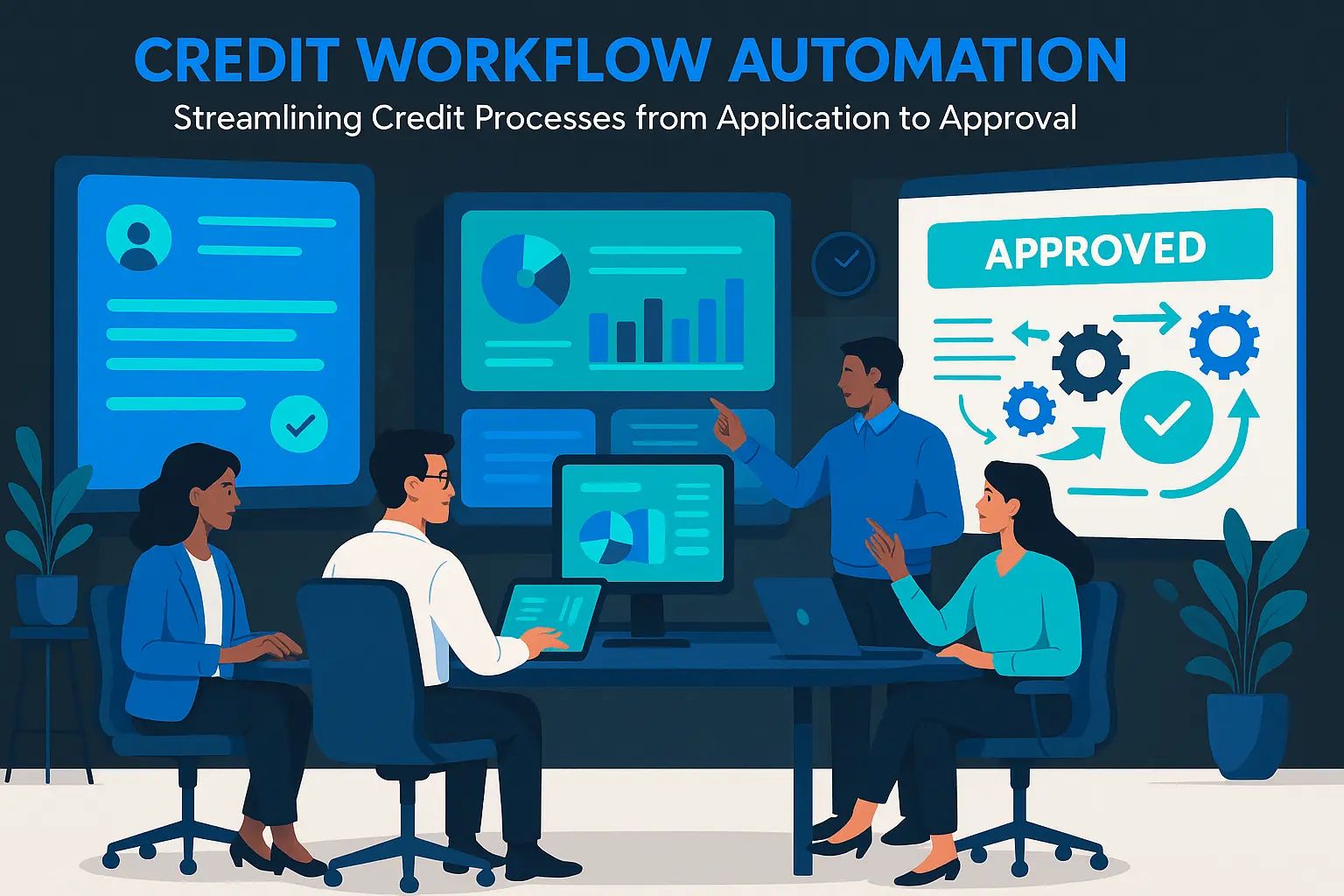
Credit Workflow Automation: Streamlining Credit Processes from Application to Approval
Sofia Rangoni

Jan 19, 2026
What is Credit Workflow Automation?
Credit workflow automation replaces manual, repetitive steps in credit processing with digital tools and rules-based software. Instead of juggling spreadsheets, chasing down paper documents, or waiting on email threads, an automated workflow moves each application through clearly defined steps, collecting information, checking documents, verifying data, and routing decisions, without human intervention at every stage.
This approach removes bottlenecks and creates a predictable, transparent process. Everyone involved, applicants, credit officers, underwriters, can see progress in real time, reducing guesswork and delays.
Key Components of an Automated Credit Workflow
An automated credit workflow is built from a few crucial elements:
Who Benefits from Automation?
Credit workflow automation isn’t just for banks or big lenders. Any business or institution that extends credit, retailers offering financing, credit unions, fintech startups, gains value. Applicants experience less paperwork and faster responses. Credit teams spend more time on complex cases, less time tracking down files. Leadership sees measurable improvements in risk management, process efficiency, and customer satisfaction.
Now that we’ve explored what credit workflow automation means and who it serves, let’s look closer at how these workflows operate behind the scenes, revealing what actually happens from the moment a credit application is submitted.
How Credit Workflow Automation Works
Automation Stages: From Application to Servicing
The journey begins when a customer submits a credit application, whether online or at a branch. Automated workflows immediately capture the application and extract the relevant data. Verification steps, such as validating identity and checking supporting documents, happen with minimal human input. Built-in rules route each application based on specific criteria like credit score, loan amount, or risk profile, ensuring nothing gets lost in the shuffle. Approvals, requests for additional information, and even disbursals are handled in sequence, keeping the process moving until the credit product is fully set up.
Integration with Existing Systems
Most automation solutions don’t operate in a silo. Instead, they connect directly to core banking systems, credit bureaus, document management tools, and communication channels. For instance, when an application is received, APIs can trigger an automatic pull of credit history, upload documents for digital verification, and sync real-time updates to your CRM. This interconnectedness means data only needs to be entered once, eliminating repetition and the risk of errors.
Typical Workflow Example
Imagine an applicant starts a car loan application online. The system automatically checks their credit file, emails them a list of required documents, and notifies a loan officer if any information is missing. After document upload, AI-driven tools review pay stubs and identification for inconsistencies. If everything’s in order, the system pushes the application to underwriting, which applies pre-set decision rules. Approval or rejection is delivered immediately, and the applicant receives a text with the decision, often within minutes.
Understanding how these sequences work in practice helps clarify which features are most valuable, and what to prioritize when choosing an automation solution.
Core Features to Look For in Credit Workflow Automation Solutions
Document Collection and Verification
No one wants to be buried in paperwork or lost file folders. Effective automation solutions gather documents digitally, let applicants upload straight from their phone or desktop, and check for completeness and accuracy on the spot. Optical character recognition (OCR) speeds up data capture, while instant verification checks keep the process from stalling out over missing payslips or outdated statements.
Automated Risk Assessment and Scoring
Modern systems don’t just shuffle applications, they analyze them. Look for tools that run submitted data through configurable risk models, pulling in credit bureau info and other data sources automatically. The best platforms can adjust scoring rules as your risk appetite shifts, so you don’t need a developer for every policy tweak.
Credit Decision Rules and Routing
If your solution can’t adapt to the way you approve credit, move on. Top-tier automation offers decision engines that support layered rules, conditional policies, and “if-this-then-that” logic. Routing moves applications down the right path, minimizing bottlenecks and flagging exceptions for human review only when truly necessary.
Notifications and Customer Updates
Silence breeds frustration for applicants. Automated status updates, via email, SMS, or portal, keep everyone in the loop. Customizable alerts also prompt your team to pick up stalled tasks, ensuring applications never linger unnoticed in digital limbo.
Compliance and Audit Trails
Regulatory checks aren’t optional. Every document upload, rule change, and decision, needs a timestamped log. Look for solutions that create detailed audit trails, simplify compliance reviews, and protect you from costly surprises during an audit.
With these core features in place, organizations can unlock the true speed and reliability of automated credit workflows. Next, let’s take a closer look at the tangible gains and competitive advantages that come from embracing this automation journey.
Benefits of Automating Credit Workflows
Reduced Manual Errors
Credit processes often rely on large sets of data, calculations, and document reviews. When these tasks are performed by hand, mistakes like data entry errors, missing signatures, or misfiled information can lead to costly delays. Automation replaces manual steps with rule-driven tasks, drastically cutting down on inaccuracies and ensuring that documents and form fields are always validated before they move forward.
Faster Credit Decisions
Manual credit approvals can drag on due to repetitive checks, slow handoffs, and review bottlenecks. Automated workflows keep applications moving, gathering documents, running credit checks, and triggering review steps automatically. This transforms application review from a multi-day process to a streamlined sequence that may take only hours. Quicker responses mean fewer abandoned applications and improved conversion rates.
Stronger Fraud Prevention
Automation isn’t just about efficiency, it’s also a powerful defense against fraud. Built-in verification tools can check applicant details against third-party sources, flag anomalies, and enforce multi-layered checks without extra manual effort. Suspicious patterns are spotted fast, and risky applications can be routed for further review before approval, keeping your lending process secure.
Improved Member or Customer Experience
Borrowers notice when their application journey is smooth and free of frustrating delays. Automated systems deliver instant progress updates, clarify next steps, and can alert applicants right away if additional information is needed. Users feel involved and informed, resulting in greater satisfaction and loyalty, and positive word-of-mouth that brings in new applicants.
Understanding these benefits reveals how automation can reshape core credit processes for the better. The next step is to make sure implementation runs smoothly and delivers real value, by planning your approach carefully from day one.
Best Practices for Successful Implementation
Choosing the Right Processes to Automate
Begin with high-volume, repetitive credit processes that drain time and slow down decision-making. Prioritize tasks like document gathering, data entry, and routine approvals where automation will eliminate bottlenecks. Mapping each step, no matter how minor, will reveal surprising inefficiencies you can target early.
Ensuring Data Security and Compliance
Every automated step touches sensitive financial data. Use encrypted connections and keep clear audit logs to meet regulatory expectations. When mapping the automation journey, involve compliance teams to flag potential risks before launch. Periodic reviews of automated workflows help catch gaps or lapses as regulations evolve.
Change Management with Staff and Stakeholders
Automated credit workflows don’t replace people, they free them for more important work. Regularly update staff on what’s changing, and invite their feedback on pain points. Offer hands-on training and highlight small early wins to boost confidence. When stakeholders feel included, resistance fades and adoption sticks.
Mastering these practices will make your transition to automated credit workflows smoother and more reliable. Next, let’s see what these recommendations look like in real organizations making automation part of their everyday operations.
Examples of Credit Workflow Automation in Action
Consumer Credit Application Processing
Imagine a borrower applying for a credit card online. With automation, the system instantly gathers their application details, verifies identity through integrated databases, and pulls credit history within seconds. Smart rules trigger document requests only when needed, speeding up the process. If everything matches up, the applicant may receive a conditional approval in minutes, rather than waiting days for a human to review paperwork.
Commercial Loan Approvals
For business loans, automation shines by handling complex requirements like financial statement uploads, business registration validation, and risk scoring. When a company applies, the workflow routes it through compliance checks, assigns tasks to the right analysts, and tracks each step for transparency. Bottlenecks vanish because reminders and escalations happen automatically if documents are missing or an approval is delayed.
Credit Limit Adjustments and Reviews
Routine credit limit increases or reviews no longer need manual intervention. Automated workflows can trigger reviews based on account activity, payment history, or periodic schedules. The system analyzes up-to-date customer data, applies policy rules, and recommends adjustments or flags exceptions for human review. Customers benefit from timely notifications and improved access to credit without extra paperwork.
These real-world examples show how automation transforms cumbersome processes into streamlined, responsive experiences. Next, let’s see how you can take the first steps toward putting these solutions into practice in your own organization.
Getting Started with Credit Workflow Automation
Assessing Your Current Workflow
Before you leap into automation, map out your current credit process in detail. Take note of every form, check, and approval step, no matter how trivial. Look for bottlenecks, like repeated data entry, stalled decisions, or unclear handoffs between teams. These pain points often become your best automation opportunities.
Vendor Evaluation Tips
The automation market is crowded, but one size never fits all. As you weigh options, prioritize solutions that integrate cleanly with your existing systems, especially core banking and CRM tools. Insist on clear demonstrations of their platform solving challenges similar to yours. Ask reference customers blunt questions about everyday reliability, not just impressive features.
First Steps: Quick Wins to Build Momentum
Start with automating smaller, high-volume tasks that slow down your team, like document collection or status notifications. These projects require minimal effort to deploy, deliver measurable results fast, and build internal support for broader automation. Celebrate these early wins to keep your team motivated and ready for more complex changes.
With groundwork laid, it’s time to explore real-world stories that bring automation’s impact to life and offer inspiration for your own journey.
Frequently Asked Questions
How does credit workflow automation reduce approval times?
Automation speeds things up by instantly collecting and verifying information, flagging anything unusual, and moving applications to the right person or step without delay. All this happens in real time, no more waiting for manual checks or email chains.
Is it hard to integrate automation with existing systems?
Modern solutions connect through APIs or easy-to-use connectors. Most vendors provide tools and guidance to map your current steps so you don’t have to start from scratch. A careful plan keeps your daily work humming while you add automation on top.
Will automation replace credit analysts or underwriters?
No, automation takes care of repetitive, data-driven tasks, but analysts and underwriters are still vital. Their know-how is crucial for exceptions, judgment calls, and complex applications that require a human touch.
What about data privacy and compliance?
These systems are built to handle sensitive financial data securely. Look for features like role-based access, encryption, and detailed audit logs to meet regulations. Always make sure automation tools align with your industry’s compliance standards.
Can small banks or lenders benefit from workflow automation?
Absolutely. Small teams benefit even more from freeing up staff hours, reducing mistakes, and improving customer experience, without needing a big budget or tech department.






💚 Don’t get left behind
Ready To Join The Circular Movement?
United for a smarter shopping experience and a better planet