
Credit Decisioning Software: How It Works, Why It Matters, and How to Choose
Sofia Rangoni

Jan 8, 2026
What Is Credit Decisioning Software?
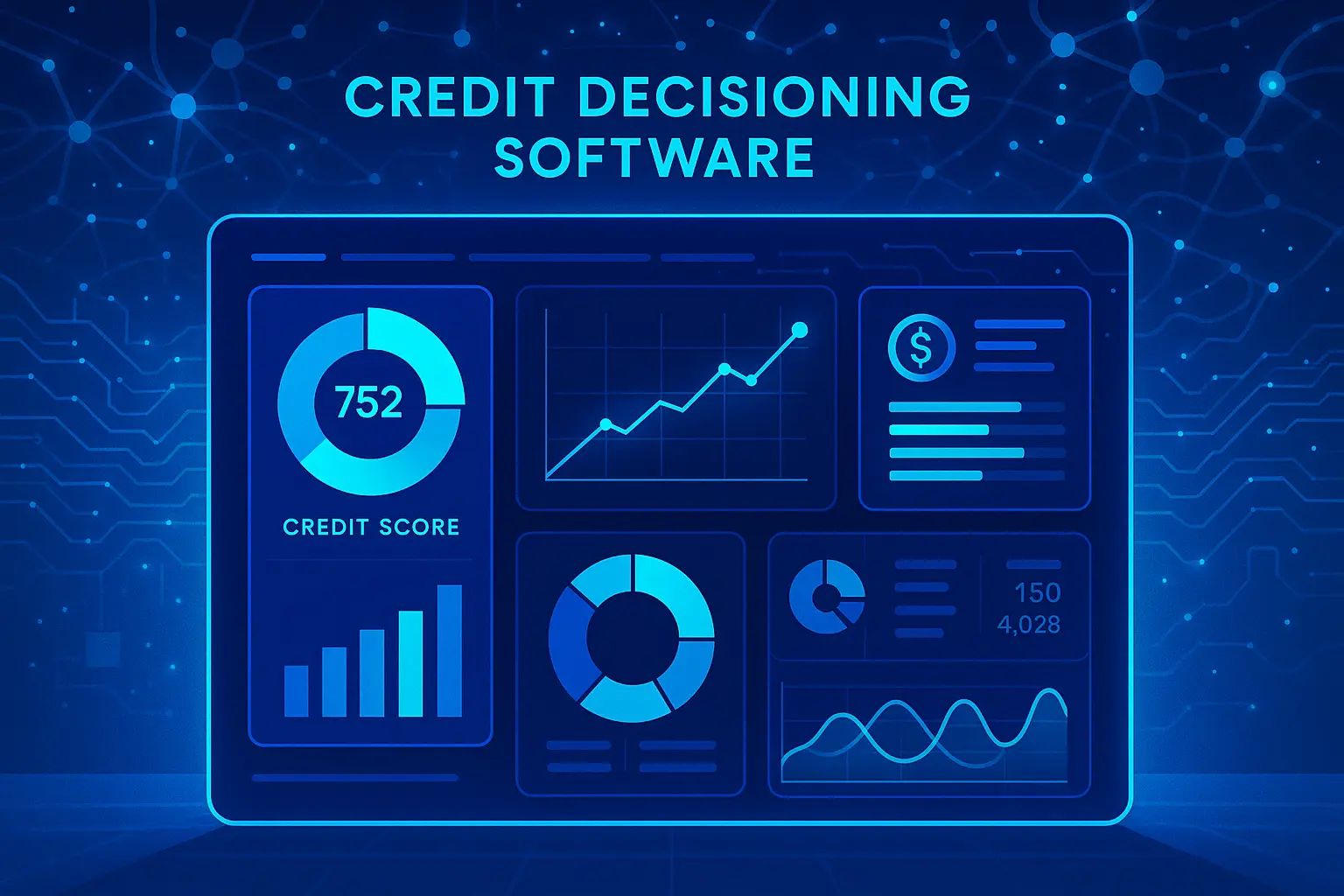
Credit decisioning software is a digital tool that lenders use to determine whether to approve or decline applications for credit products, such as loans or credit cards. Instead of relying on slow, paperwork-heavy reviews, this technology evaluates an applicant’s financial profile in moments, drawing from modern data sources and sophisticated rule sets.
At its core, the software ingests information, like credit scores, income details, payment histories, or even alternative data, and automatically judges the level of risk each applicant poses. By doing so, it can provide lenders with a clear, justifiable recommendation for each credit decision. The goal: faster answers, greater transparency, and fewer human errors.
How Credit Decisioning Differs from Traditional Underwriting
Traditional underwriting typically involves a human analyst sifting through an applicant's paperwork, verifying details, and making a judgment based on set guidelines. This approach can be slow, inconsistent, and prone to unconscious bias.
Credit decisioning software replaces much of this manual legwork with automation. It applies rules and criteria consistently, runs real-time calculations, and immediately flags applications that require further attention. Not only does this streamline operations, but it tends to create a more level playing field for all applicants.
Who Uses Credit Decisioning Software?
Banks, fintech startups, credit unions, and alternative lenders all rely on credit decisioning systems to accelerate application reviews and reduce default risks. Even retailers offering financing options at the point of sale and peer-to-peer lending platforms use these tools to assess borrower eligibility quickly and safely.
As financial institutions strive to keep pace with tech-savvy customers and rising application volumes, the reasons for embracing this software go beyond mere efficiency. The next section gives a closer look at the nuts and bolts, how these systems work, what features stand out, and why their approach to credit is reshaping the industry.
How Credit Decisioning Software Works
Key Features to Expect
Credit decisioning software brings multiple tools together to automate and streamline lending decisions. Expect to see features like rule-based scorecards, customizable credit policies, real-time data access, document collection portals, and decision audit trails. Some systems also allow for customer notifications and integration with third-party data providers.
Automated vs. Manual Processes
Traditional credit assessment involved painstaking manual review, scouring through bank statements, pay stubs, and sometimes even calling applicants to clarify information. Modern credit decisioning software replaces most of this manual effort. Automated workflows analyze applications, pull required data, and apply preset rules within seconds. However, many platforms also offer a “manual veto” step where credit officers can override automated outcomes if needed, blending speed with human oversight.
Data Sources: Traditional and Alternative
Most solutions connect to traditional sources like credit bureaus, banking history, and employment records. Increasingly, they also incorporate alternative data: utility payments, rental histories, and even digital footprints. By widening the data net, lenders can accurately assess borrowers overlooked by conventional scoring.
Using Machine Learning and AI
Some platforms analyze thousands of variables per applicant, learning from past data to predict default risk more precisely. AI-driven systems adapt rules or flag unusual applications, spotting fraud or underserved opportunities that human reviewers might miss. Over time, these systems “learn” which applicants are most likely to repay, continually refining their accuracy.
Understanding the behind-the-scenes workings of credit decisioning gives context to its impact, especially for lenders seeking reliability and borrowers hoping for fair, speedy access to credit. Next, let’s explore why these improvements matter for everyone involved in lending.
Benefits for Lenders and Borrowers
Faster Decision Times
Credit decisioning software can analyze applications in seconds rather than days. Automated checks mean applicants aren’t left waiting for manual processing, and lenders can respond to opportunities immediately. For borrowers, this speed can make the difference in securing a loan when timing is critical.
Consistency and Fairness
Rules-based algorithms ensure that every application is measured against the same criteria. This removes personal bias that may affect manual decisions. As a result, applicants get a fairer assessment, and lenders reduce the risks tied to inconsistent underwriting.
Lower Operational Costs
By automating repetitive tasks like document verification and credit scoring, lenders can serve more customers with fewer resources. This streamlining reduces the need for manual labor, cuts overhead, and allows teams to focus on more nuanced cases.
Improved Risk Assessment
Advanced analytics and access to broader data sources allow lenders to paint a clearer picture of an applicant’s ability to repay. This means more accurate credit limits, better protection against fraud, and fewer losses from defaults. Borrowers with unconventional financial backgrounds may also find it easier to be considered, since software can process alternative forms of credit data.
Reporting and Compliance
Every decision and action is logged, making it easy to generate regulatory reports or conduct audits if needed. This automatic recordkeeping helps lenders stay compliant with local laws and industry standards, while also giving borrowers clarity on how decisions were made.
Seeing these benefits in action highlights how technology transforms lending. But how does credit decisioning software apply to different types of loans and everyday scenarios? Let’s look at how it works in practice across common lending situations.
Real-World Applications
Consumer Lending
Imagine applying for a personal loan online and receiving a decision in minutes, credit decisioning software makes this possible. It analyzes credit scores, bank transactions, employment data, and spending patterns to rapidly assess if someone qualifies and at what interest rate. This speed reduces anxiety for applicants and cuts down work for loan officers. For example, digital banks and fintech lenders use these systems to offer small loans to first-time borrowers who might lack an established credit history, making lending more inclusive.
Commercial Loans
Businesses also benefit from fast, reliable decisions. When a small business needs funding to expand or purchase inventory, lenders use credit decisioning platforms to evaluate not just the owner’s credit, but also business cash flows, trade payments, and revenue trends. This reduces the risk of manual errors and can speed up approvals from weeks to days. Commercial banks and alternative lenders rely on these insights to issue lines of credit or equipment loans with confidence.
Buy Now, Pay Later
Popular BNPL services wouldn’t work without instant approval decisions. As shoppers check out online, the software quickly evaluates their eligibility for installment payments by checking credit history, prior repayment behavior, and sometimes even social signals. This means consumers can split payments and get what they need immediately, while retailers reduce friction at checkout.
Credit Card Approvals
Credit card companies rely on decisioning tools to sort through mountains of applications every day. Instead of simple rule-based filters, they deploy advanced algorithms to spot reliable applicants, prevent fraud, and offer tailored card features. This ensures that applicants get matched with the right type of credit card, and issuers can manage portfolios more efficiently.
From quick loan approvals to smarter risk assessments, real-world uses of credit decisioning technology shape the lending experiences we encounter daily. Next, let’s explore the most important factors to consider when evaluating a credit decisioning solution for your specific needs.
How to Choose the Right Credit Decisioning Software
Integration with Existing Systems
The ideal solution doesn’t force you to re-engineer your workflow. Check whether the software connects easily to your core systems, like loan origination platforms, CRM tools, and data sources. A good sign: robust APIs and prebuilt connectors that handle common data formats. If a demo feels too “standalone,” ask about real-world integrations with tools you already use.
Customization and Scalability
No two lenders assess risk quite the same way. Look for software that lets you adjust decision rules, scoring models, and workflows without developer help every time. As you grow, you’ll want a platform that supports more products, higher volumes, and new data sources without grinding to a halt or needing major upgrades.
Vendor Support and Security
Support isn’t just about someone answering emails: fast, knowledgeable help during onboarding or emergencies matters. Dig into what happens after you sign the contract. Does your vendor provide ongoing training and system updates? Is security baked in, with regular audits and transparent compliance documentation?
Choosing a platform with the right fit is only part of the process. Once you know your must-haves and dealbreakers, it pays to see how the leading providers measure up, whether you’re seeking innovation, reliability, or both.
Top Credit Decisioning Software Providers
Choosing a credit decisioning software provider can define how quickly you approve applications, how well you manage risk, and how easily your system adapts to market change. Here are some industry leaders to consider, each bringing a unique approach to automation and analytics.
FICO Decision Management Suite: FICO is synonymous with credit risk analytics. Their platform goes beyond scores, allowing organizations to design, test, and deploy decision strategies using a blend of traditional and alternative data. The platform’s flexibility supports banks, fintechs, and specialty lenders in tailoring decision logic, while baked-in regulatory compliance aids smooth audits.
Experian PowerCurve: PowerCurve’s modular setup enables lenders to automate everything from credit origination to collections. Experian’s access to global credit datasets gives their users a deep, updated view of applicants. Its intuitive interface means business users, not just IT, can adjust rules and models on the fly.
Zest AI: Zest AI specializes in machine learning-powered underwriting. Their software lets lenders adopt bespoke AI models that improve risk prediction, often boosting approval rates for creditworthy applicants overlooked by legacy scoring. Zest stands out for its bias mitigation tools, promoting fair lending practices alongside speed.
Provenir: Provenir offers an agile decisioning platform popular among digital lenders and fintechs. It stands out for its drag-and-drop business rule engine and broad third-party data connectivity. Provenir empowers teams to launch new products fast without deep development cycles.
Lendflow: Built for embedded finance, Lendflow makes it easy to add decisioning capabilities to online platforms. Startups and marketplaces can onboard credit tools within days, using both off-the-shelf and custom decision logic that grows with their risk appetite.
Each platform has its strengths: predictive analytics, AI-powered models, or rapid integration. Before you pick a provider, understanding your own business chains and technical needs will help you find the right fit.
Equipped with a sense of the market leaders, it’s time to get answers to the most common questions about how credit decisioning software works in practice and what you can expect from an implementation.
Frequently Asked Questions
Can credit decisioning software really reduce approval times?
Yes. By automating data intake and assessment, lenders often move from days to minutes or even seconds for straightforward applications.
Is it possible to customize decision rules for different loan products?
Absolutely. Most platforms let you tailor credit policies for mortgages, auto loans, credit cards, and more, so each product gets the right decisioning criteria.
Will using this software make my lending more secure?
Modern decision engines typically include fraud detection tools and keep detailed audit trails, so authorized users can track every approval or decline. This supports both security and compliance efforts.
Can smaller lenders benefit from credit decisioning tools?
Definitely. Cloud-based solutions allow even small teams to access advanced analytics, automation, and reporting at a reasonable cost, without the need for large IT departments.
How do privacy and data regulations affect credit decisioning platforms?
The best systems are built to handle local and global regulations like GDPR or the FCRA, making it easier for lenders to stay compliant while handling sensitive information.






💚 Don’t get left behind
Ready To Join The Circular Movement?
United for a smarter shopping experience and a better planet