
Credit Decision Engine: How Automated Lending Decisions Work and Why They Matter
Sofia Rangoni

Feb 20, 2026
Understanding a Credit Decision Engine
Definition and Purpose
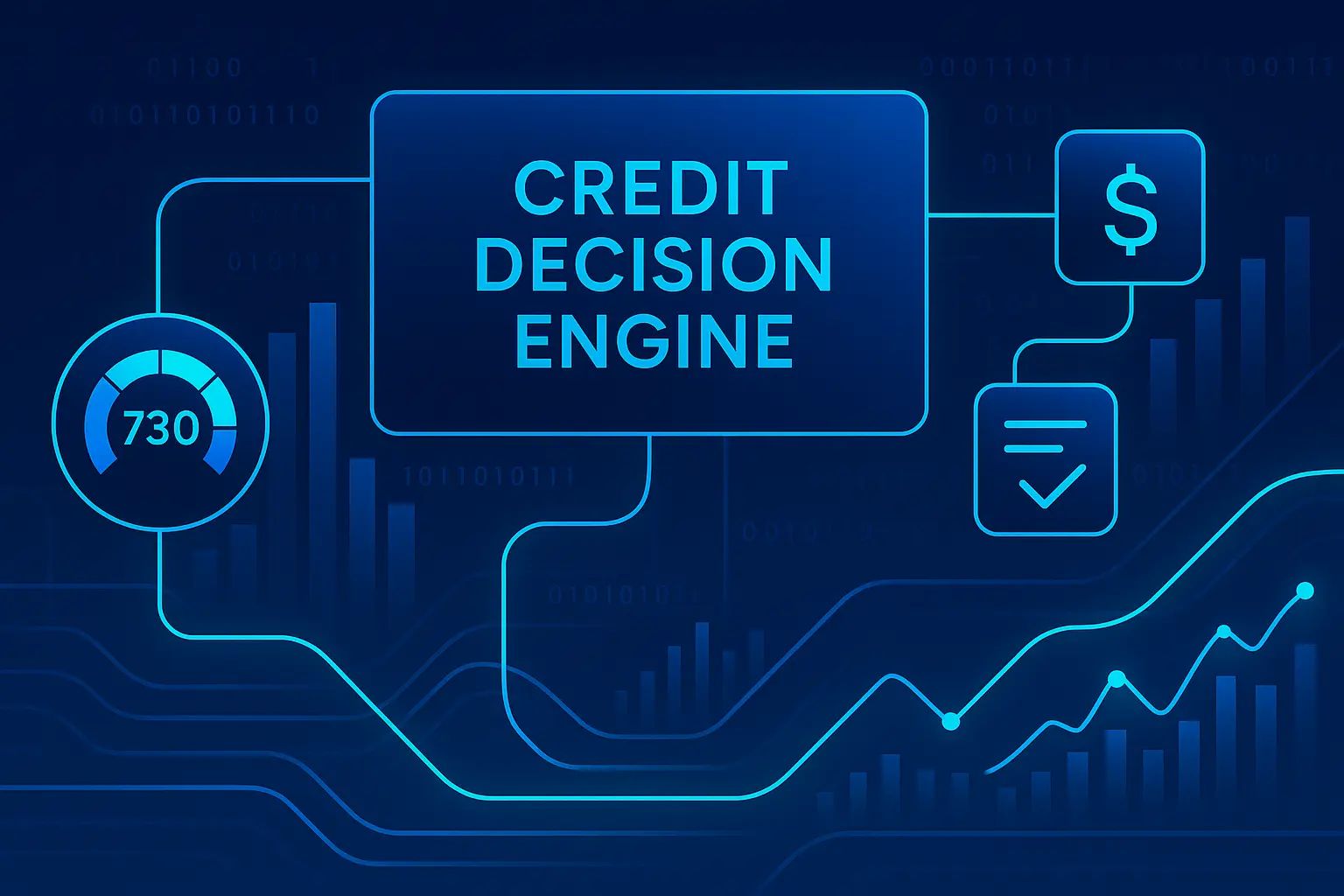
A credit decision engine is a specialized software system that determines whether an individual or business should be approved for credit, such as a loan or credit card. Instead of relying on lengthy manual reviews, these engines analyze applicant information using pre-set criteria and models built from credit risk data. The main aim: deliver decisions that are swift yet grounded in a structured evaluation, removing much of the guesswork that once defined lending.
How a Credit Decision Engine Processes Applications
Data Collection and Integration
When someone submits a credit application, the decision engine springs into action by pulling in information from multiple sources. It collects details provided by the applicant, such as income, employment history, and requested loan amount, as well as external data like credit bureau reports, banking transactions, and public records. This seamless integration means the engine builds a detailed financial snapshot of the applicant in seconds.
Scoring and Risk Assessment
With the data assembled, the engine analyzes risk using established scoring methods. It calculates credit scores based on payment history, outstanding debts, length of credit history, and other indicators. In addition, it assesses specific factors related to the loan product, potentially flagging inconsistencies, recent delinquencies, or signs of financial distress, to determine how risky it would be to approve this application.
Rules, Models, and Machine Learning
This is the heart of automated lending. Decision engines don’t simply follow rigid rules; they use a combination of expert-defined policies and adaptive models. Rule sets might immediately decline applications with certain red flags or approve those that meet all criteria. Meanwhile, advanced engines employ machine learning models trained on historical data to spot nuanced patterns, recognizing trustworthy applicants who might not fit traditional molds, or unearthing subtle signals of potential default.
Real-Time Decision Making
All of these processes happen at lightning speed. The engine synthesizes the data, applies scoring and rules, and renders a decision, often within seconds of submission. The applicant receives a clear verdict, whether it’s an approval, a request for more information, or a polite decline. This rapid turnaround redefines expectations for both lenders and borrowers.
These steps open the door to a major payoff: streamlined workflows and greater confidence in lending outcomes. But the most significant impacts unfold when you consider what happens next, when both sides stand to benefit from a more agile, data-driven approach.
Benefits for Lenders and Borrowers
Speed and Efficiency Gains
Automated credit decision engines can review an application almost instantly. This rapid turnaround means borrowers aren’t left waiting days for a response, and lenders can process more applications in less time. Faster decisions also open doors for services like instant pre-approvals or same-day funding, giving lenders a competitive edge and improving borrowers’ overall experience.
Consistency and Accuracy
Unlike manual reviews, automated systems don’t get tired or overlook details. Every applicant is evaluated using the same criteria, reducing the risk of human error or unconscious bias. For lenders, this reliability leads to sounder loan portfolios, while borrowers can expect fairer outcomes based on objective data.
Customizable Credit Policies
Decision engines can easily incorporate unique credit policies or adapt to market changes quickly. If a lender wants to encourage first-time borrowers or adjust to new regulations, the system’s rulesets can be updated without starting from scratch. This flexibility ensures both parties benefit from relevant, responsive lending criteria.
Understanding these advantages is essential before exploring what features to consider and challenges to expect when integrating a credit decision engine into your lending process.
Choosing and Implementing a Credit Decision Engine
Essential Features to Look For
An effective credit decision engine should do more than automate yes-or-no answers, it should provide lenders with agility as market needs evolve. Look for engines that allow you to easily configure new lending criteria, add data sources, and adjust risk models without a team of developers. Transparent decision logic helps your team verify why decisions are made, which becomes crucial if you need to explain outcomes to applicants or auditors. Consider analytics dashboards that let you monitor application outcomes and spot emerging patterns, so policies stay sharp and informed. If you operate in multiple regions, multilingual interfaces and the ability to support local regulations are also a must.
Common Integration Challenges
Lending teams often assume that a credit decision engine is plug-and-play, but real-world implementation involves surprises. Connecting existing core systems, integrating with third-party data providers, and ensuring everything runs fast under high volumes are common sticking points. Test integrations thoroughly before going live. Build in data validation checks, and ensure that error handling is robust, any breakdown could impact loan approvals and customer trust. Involving both IT and lending staff in the process can uncover bottlenecks early, such as mismatches in data formats or unexpected rules conflicts.
Adapting to Regulatory Needs
Regulatory compliance isn’t static, rules shift as authorities react to market changes. Your engine should support versioned policy management, making it possible to update lending criteria without rewriting everything from scratch. Look for detailed logging of all decisions and data usage, as audit trails are essential for both internal review and regulatory checks. Engines that can flexibly apply varying requirements across portfolios or geographies help you expand confidently, knowing you can demonstrate compliance wherever you operate.
As technology and regulations progress, credit decision engines are being shaped by new ideas and capabilities. The next section explores how alternative data sources, smarter use of AI, and emerging trends are redefining automated lending.
Innovations and Trends in Credit Decision Engines
Incorporating Alternative Data
Traditional credit reports still play a big role in lending decisions, but modern credit decision engines are branching out. By analyzing new sources, mobile phone bills, online transaction histories, utility payments, and even social media signals, engines reach individuals previously considered "credit invisible." This wider lens helps lenders understand an applicant’s financial behaviors and resilience, leading to credit offers for underserved populations without sacrificing responsible risk assessment.
AI and Explainability
Artificial intelligence is reshaping how decision engines score applicants. Sophisticated models can identify patterns and relationships in massive data sets far beyond what traditional rules can capture. But higher complexity often means less transparency. Lenders now rely on new tools that break down AI-driven decisions into digestible, human-readable explanations. This not only satisfies regulatory requirements for fairness, but also makes it easier for borrowers to understand and challenge decisions.
Future Developments
Tomorrow’s decision engines may predict creditworthiness weeks or months before a loan application is filed, drawing on real-time data flows and behavioral cues. Expect blockchain-based identity systems, open banking APIs, and decentralized trust scores to become part of lending infrastructure. As these innovations take root, real-time credit assessment will become more granular, personalized, and accessible, shifting how both lenders and borrowers experience the loan process.
As automated lending technology keeps evolving, it's essential to understand the nuts and bolts, how these engines weigh data, apply models, and ultimately decide who qualifies for credit. Let’s explore the mechanics behind these critical decisions.
FAQ on Credit Decision Engine
What is a credit decision engine?
A credit decision engine is software that evaluates loan applications automatically. It collects data about the applicant, analyzes creditworthiness, and delivers a decision within seconds—without humans needing to review every detail.
How does it determine if I’m eligible for credit?
The engine pulls together data like credit scores, income, employment status, and outstanding debts. It then runs this data through a set of programming rules and algorithms designed to estimate how likely someone is to repay a loan.
Can a credit decision engine make mistakes?
Yes, no system is perfect. Outdated rules, flawed data, or technical errors can sometimes produce incorrect decisions. Modern engines are tested regularly and often include ways for lenders to review or override unusual outcomes.
Is my information safe in a credit decision engine?
Most reputable providers use strong encryption and security controls to protect your data. However, these engines rely on integration with other systems, so end-to-end data security depends on all parties involved.
Why are decision engines so fast compared to manual review?
They eliminate paperwork and guesswork by running thousands of calculations instantly. With reliable data and algorithms, they can spot patterns much faster than a human underwriter could.
Can I appeal a decision made by a credit decision engine?
In most cases, yes. If you’re rejected, you can usually ask the lender for details or request a manual review. Consumer protection laws in many countries require lenders to explain the reason for denials.






💚 Don’t get left behind
Ready To Join The Circular Movement?
United for a smarter shopping experience and a better planet