
Commercial Credit Underwriting Software: Features, Trends, and Top Solutions
Sofia Rangoni

Dec 30, 2025
How Commercial Credit Underwriting Software Works
Key Workflow Steps
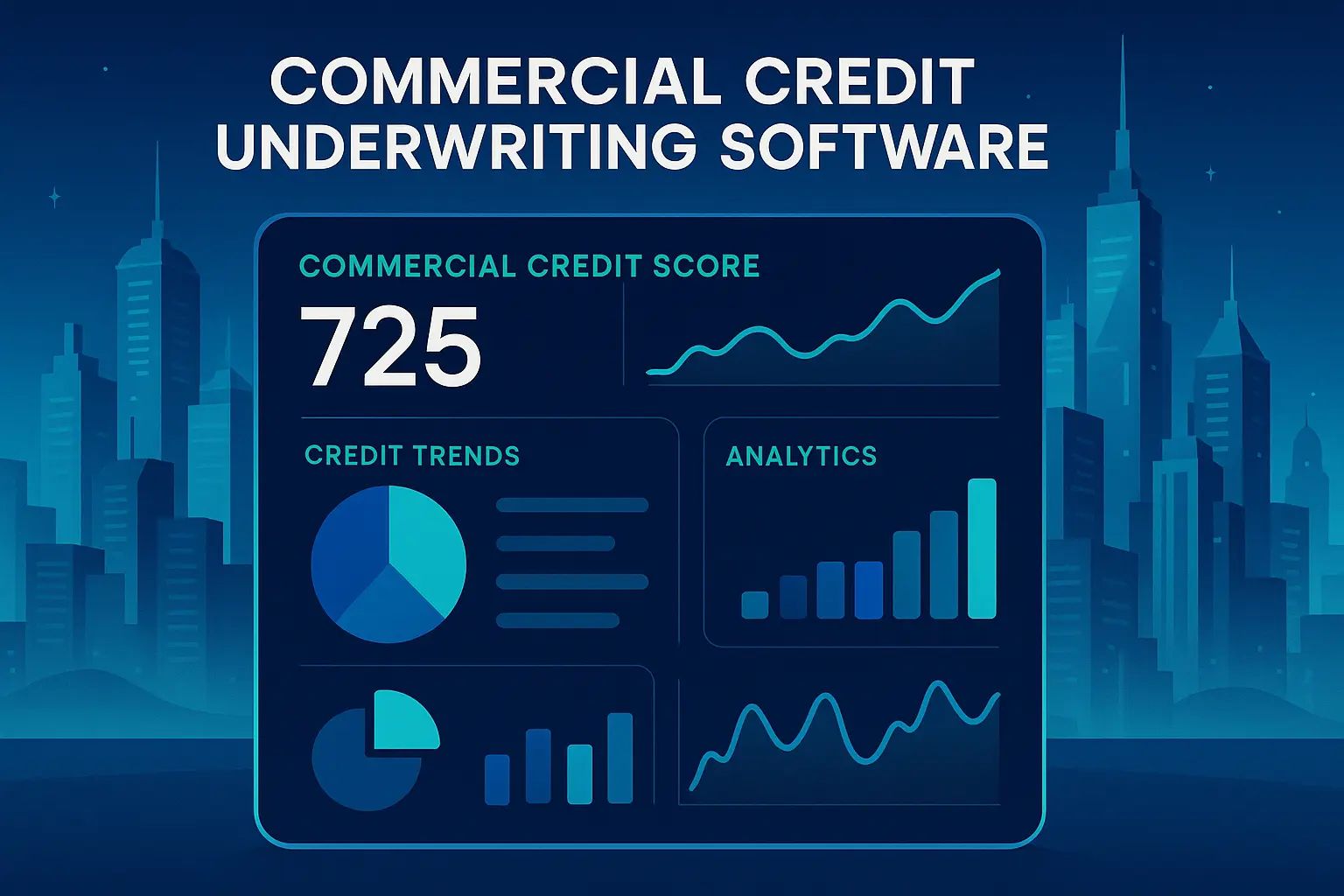
Commercial credit underwriting software guides lenders through a structured, often customizable process that replaces time-consuming manual reviews. The process typically begins when a loan application enters the system. The software pulls relevant data, such as financials, company background, and credit bureau scores, into a single dashboard. Automated validation flags missing or unusual entries, reducing the chance of errors early on.
Next, scoring models evaluate the risk profile of the applicant. These models crunch financial ratios, cash flow patterns, industry benchmarks, and applicant history. They assign risk scores or grades based on lender-defined criteria. Underwriters can review detailed analytics, simulate different scenarios, and document exceptions with just a few clicks, rather than sifting through paperwork or scattered email threads.
Once a decision is made, the system generates custom outputs, including approval notices, terms sheets, and compliance documentation. An audit trail records every action, supporting oversight and regulatory reviews.
Integrating with Core Banking Systems
Seamless integration is essential for commercial credit underwriting software to deliver its full value. Modern platforms connect with core banking systems, loan origination platforms, and third-party data providers via APIs. This connectivity enables real-time data transfer, for example, pulling up-to-date account balances, credit exposures, or repayment histories automatically.
Integration reduces double entry and speeds up the procedure from application to funding. It also keeps customer records synchronized across the organization, supporting a consistent customer experience and reliable reporting.
Understanding these workflow steps and integration points makes it much easier to compare features and prioritize what’s most essential when evaluating different software options for your lending team.
Essential Features to Look For
Automated Risk Assessment
Instantly evaluate borrower risk using algorithms that process financial statements, payment histories, and industry benchmarks. This feature reduces the reliance on manual analysis and minimizes delays in credit decisions.
Custom Credit Policies
Every institution has its specific credit appetites and guidelines. Flexible policy configurations let you encode your unique underwriting criteria, from minimum credit scores to tailored collateral terms, without scripting or IT involvement.
Data Source Integration
Seamless connections with internal and external data sources, such as credit bureaus, financial data providers, and fraud detection services, enable underwriters to compile a holistic profile of each applicant without toggling between systems.
Real-Time Decisioning
Some systems provide decision outputs in seconds, crucial for responding to competitive lending environments. Instant feedback not only speeds up approvals but also gives your team more bandwidth for complex cases.
Regulatory Compliance Tools
Audit trails, rule libraries for local and international regulations (such as AML, KYC, and Basel guidelines), and automated alerts for compliance gaps ensure your credit processes stay in line with constantly evolving requirements.
User Access Control and Security
Define granular roles and permissions to ensure sensitive applicant data remains protected and only accessible to authorized credit officers. Features like single sign-on and activity tracking help prevent data misuse.
As you explore the technological advancements shaping underwriting, it’s worth keeping an eye on the innovations that are setting new industry standards, both today and for the future.
Emerging Trends in Commercial Credit Underwriting
AI and Machine Learning in Underwriting
Artificial intelligence has moved beyond simple automation. It powers risk models that find patterns in diverse datasets, cash flow, industry cycles, payment behaviors, often missed by traditional scoring. Machine learning algorithms update in real time, adapting to new data, analyzing vast portfolios, and refining credit rules with more precision as each decision is made. Lenders that embrace this approach can underwrite complex deals faster, flag outlier risks, and reduce manual intervention.
Cloud-Based Deployment
The move to the cloud removes reliance on legacy infrastructure. Cloud-native underwriting platforms deliver short setup times, continuous updates, and anytime access. They enable distributed teams to collaborate on loan reviews and decisions from anywhere, with strong encryption and compliance controls baked in. Cloud deployments also integrate seamlessly with other SaaS-based financial tools, supporting rapid scalability and easy futureproofing for growing lenders.
Open Banking and API Ecosystems
Open banking standards and APIs are breaking down data silos. Underwriting software can now ingest live applicant data directly from banks, accounting tools, and alternative finance services. This real-time access replaces slow, paper-based document collection, enabling richer risk analysis and streamlined credit reviews. As banking platforms continue to open up, expect underwriting tools to connect directly with an expanding suite of financial data sources, driving smarter and faster approval processes.
With these advances reshaping underwriting, it’s vital to see how individual platforms leverage technology, integrate features, and differentiate their strengths for different types of lenders.ç
Top Commercial Credit Underwriting Software Solutions
Comparison Table of Leading Platforms
Platform 1: Key Strengths
Lendscape stands out for deep industry flexibility, robust document and workflow tools, and advanced risk analytics baked in as standard. Trade finance and complex commercial lending benefit from its context-aware rule engines and rapid onboarding capabilities. Its API toolkit makes it a favorite for banks modernizing legacy systems without a rip-and-replace approach.
Platform 2: Key Strengths
nCino leverages the Salesforce ecosystem to offer lightning-fast case management, user-friendly interfaces, and end-to-end digital credit workflows. Automated credit memo creation and seamless document collection speed up underwriting, while compliance checks run in the background. It’s often selected by lenders scaling operations or seeking tighter CRM integration.
Platform 3: Key Strengths
FICO Origination Manager highlights its analytics power with plug-and-play scorecards, decision models, and the ability to iterate risk strategies rapidly. The platform’s machine learning engine identifies new credit patterns and brings real-time adjudication to the forefront, making it ideal for organizations optimizing portfolio quality while accelerating decisions.
With so many proven solutions on the market, matching platform strengths to your institution’s specific needs is crucial. Keep reading to learn how to confidently sort through competing options and select the software that supports your goals and workflows best.
How to Choose the Right Solution
Evaluating Workflow Fit
Start by mapping your current credit assessment process from intake through decision and downstream reporting. The best software should slot seamlessly into your team’s day-to-day, not force a complete overhaul. Are field names, approval steps, and documentation requirements customizable? Request a demo and walk through a sample loan scenario using your typical data inputs. If major steps are missing or difficult to configure, keep looking.
Scalability and Growth
Small teams with ambitions to expand should verify the software can keep pace. Will performance stay reliable as your volume of applications increases? Can you add new product lines or business units without lengthy downtime or extra fees? Check for load handling during peak periods and whether permissions can be set granularly as your team diversifies.
Vendor Support and Training
A fancy dashboard means little if your staff gets stuck at key moments. Ask vendors for specifics on their onboarding process, resources for continuing education, and resolution times for technical issues. Look for a knowledge base, hands-on training sessions, and a responsive helpdesk—not just a ticketing system that leaves you waiting.
Cost Considerations
Upfront price is only part of the story. Ask for details on all fees, including setup, integration, and ongoing maintenance. Will you be charged extra for adding new users, data connectors, or modules? Consider the total investment over three to five years and weigh it against the projected efficiency gains and risk reduction. Avoid hidden “gotchas” that can balloon your costs as your needs evolve.
The right commercial credit underwriting software should ultimately empower your team to make faster, smarter decisions. Once you've narrowed down your options, it's time to compare leading platforms side by side and identify which one matches your specific priorities.
Frequently Asked Questions
What is commercial credit underwriting software?
This software streamlines how banks and lenders evaluate the creditworthiness of business borrowers, replacing manual reviews with data-driven, automated assessments. It collects financial information, analyzes risk factors, and produces clear recommendations.
How does underwriting software help reduce loan processing time?
Automation eliminates repetitive data entry and instantly checks applicant data against risk parameters and lending rules. Loan decisions that once took days can now happen within hours or even minutes.
Is it possible to customize underwriting rules for different business sectors?
Absolutely. Most solutions support granular credit policy customization, letting banks create unique scoring and rule sets for industries like manufacturing, logistics, agriculture, or tech startups.
Can underwriting platforms integrate with existing core banking or CRM systems?
Yes, integration is a key capability. Modern platforms are built to connect via APIs, ensuring seamless data flows between underwriting, core banking, CRMs, and third-party data sources.
How do these systems manage data privacy and regulatory compliance?
Underwriting software enforces access controls, encrypts sensitive information, and automates audit trails. Many come with ready-made compliance templates for frameworks such as Basel III or GDPR, reducing risk of violations.
Can small community banks or credit unions benefit from commercial credit underwriting software?
Definitely. Many vendors offer scalable options that fit the needs and budgets of smaller institutions seeking to modernize their processes and compete with larger banks.
Is ongoing training needed for staff?
Most vendors provide initial onboarding and regular training updates, either via webinars, self-paced modules, or hands-on sessions, so teams stay sharp as new features roll out.






💚 Don’t get left behind
Ready To Join The Circular Movement?
United for a smarter shopping experience and a better planet